Rituals for love are small, repeatable practices, such as lighting a candle, taking a bath, writing a letter or sharing a meal on purpose, that turn a wish for love into something you actually do. The safest ones are consent-first: they change you, or the two of you together, and never try to move a person who has not agreed.
This page gives you nine rituals for single people and couples. Each one lists what you need, the steps, the best timing and what it is for. You will also find fire safety rules, an honest look at what rituals can and cannot do, a simple weekly rhythm, and guidance on when to ask a practitioner for help.
What are rituals for love, and what do they do?
A ritual is an ordinary action done with attention and a stated purpose. Washing your hands is a habit. Washing your hands slowly before a meal while you think about who you are cooking for is a ritual. The only difference is the attention you bring to it.
Nearly every culture has rituals around courtship, weddings and mourning. They mark a change, such as the start of a relationship or the end of one. They give a restless mind somewhere to rest. And they keep a wish in view long enough that you act on it.
That last point is where rituals do their real work. A candle does not send a message across town. What it does is make you sit still for ten minutes and put what you want into one sentence. Sometimes that is enough to get you to answer the message you were avoiding, say yes to an invitation, or finally bring up the thing you have been swallowing at dinner. The change shows up in your mood and your behavior first. Anything else comes after.
Baba Ali has practiced for more than 30 years in a Senegalese ancestral lineage and works with clients across the USA by WhatsApp, phone, email and video. The rituals below are home practices that anyone can do without help. Work aimed at a specific situation, such as an ex who has gone quiet, is a different kind of work, and it is covered near the end.
Before you begin: three ground rules
Every ritual here follows the same three rules. They keep you safe and keep the work honest.
- Aim at yourself, or at the two of you together. Do not use any of these to change, call or control someone who has not agreed. That means no exes written on candles and no photos of a person who does not know you are doing this. The reasons are practical as well as ethical, and they are laid out in our posts on love spells and consent and love spells and free will.
- Write one sentence about your own part. “I am open to being loved and I will act like it.” “I will speak softly when I am tired.” A good sentence names something you will do, feel or let go of.
- Keep the setup simple and safe. Choose a quiet spot, put your phone in another room, and read the fire safety section before you light anything.
Most of the rituals share one shape. You open, you do the action, you close, and you write down a single line afterward. Opening can be as small as washing your hands and taking three slow breaths. Closing is a quiet thank-you, then snuffing the candle or putting down the pen. The one-line note is what lets you see change over a few weeks.
If any ritual feels wrong for your faith or your family, skip it. Nothing here asks you to leave your religion or borrow a tradition that is not yours.
One more calm note. If a partner frightens you, controls who you see, punishes you for saying no, or will not accept a no, a ritual is not the answer. Call the National Domestic Violence Hotline at 1-800-799-7233 or visit thehotline.org. Help is free, confidential and open at all hours.
1. A self-love bath
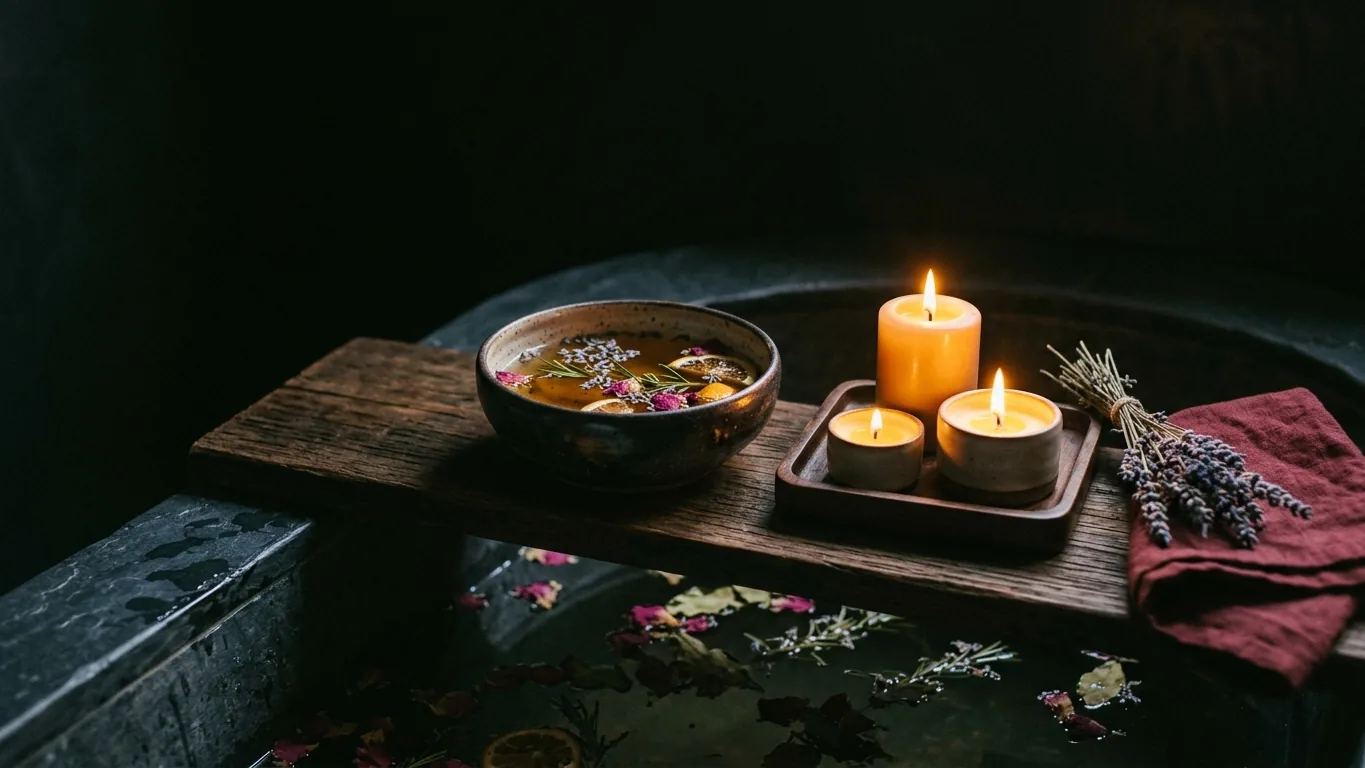
This one suits anyone worn out by a hard week, a breakup or a stretch of dating that left them drained. It asks nothing of anyone else, which makes it the easiest place to start. The purpose is to wash off the day and treat yourself the way you would like a partner to treat you. Our post on self-love rituals has a longer set if this one clicks for you.
What you need:
- a bathtub, a basin for a footbath, or a shower
- a small handful of rose petals, fresh or dried
- a tablespoon of sea salt
- a towel you like and clean clothes to put on afterward
- one candle in a holder, on a dry shelf well away from towels (optional)
Steps:
- Clean the tub or basin first. A clean start matters more than you would think.
- Run warm water, not hot. Add the salt and petals and stir with your hand.
- As you stir, say what you are washing off: the argument, the waiting, the worry.
- Soak for ten to twenty minutes. Breathe slowly. When your mind wanders, bring it back to the water.
- Before you get out, say one sentence to yourself, such as “I deserve gentleness.”
- Drain the water and watch it leave. Dry off, put on clean clothes and drink a glass of water.
Timing: once a week, or on the evening after a hard conversation. If you only have a shower, wash from your head down and hold a few petals in your palm until you finish. If you are pregnant, have sensitive skin or have a medical condition, check with your doctor first or skip the salt and petals. Plain warm water and the sentence work just as well. Our cleansing baths guide covers ingredients and safety in more detail.
2. A new-moon intention
If you want to choose a direction for the month, single or partnered, start with the new moon. The new moon is the dark moon, the start of the cycle, so tradition treats it as the time to plant something. There is no good evidence that the moon changes how love unfolds. What it gives you is a date that comes around on its own, and a date like that is a useful reason to stop and ask what you want. Our guide to moon phases and love work explains how each phase is traditionally used.
What you need:
- a sheet of paper and a pen
- a notebook to keep the pages in
- a white or pink candle (optional)
- any moon calendar or app to find the date
Steps:
- Look up the date of the new moon and set aside fifteen minutes within a day of it.
- Sit quietly for two minutes and ask yourself what you want more of in your love life this month.
- Write “This month I want to grow” and finish it with up to three lines. Choose things you control: “I want to say yes to two invitations,” or “I want to talk about money without tension.”
- Under each line, write one small action for each week.
- Read the page aloud. If you are using a candle, light it now and put it out safely when you finish.
- Put the page where you will see it, such as inside a closet door or on the fridge.
Timing: once a month, around the new moon. At the next one, read the page again, cross off what you did and write the next. Couples can write a shared page and both sign it. The best new-moon intentions are boring and doable, not grand.
3. A rose quartz or candle practice
Want a short daily or weekly pause that keeps your attention on warmth? Rose quartz or a pink candle can give you one. Rose quartz is a pink stone that modern crystal practice links with love. It has no proven physical effect on relationships, and an honest teacher will tell you so. Its job is to be a touchstone, a small object that reminds you what you are practicing. A pink candle does the same job with a flame. Our candle color guide explains why pink is used for affection and self-regard, red for passion and white for clarity.
What you need:
- a palm-sized rose quartz stone, or a pink candle in a sturdy holder on a tray
- a timer
- matches or a lighter and a snuffer, if you use the candle
Steps:
- Sit somewhere you will not be interrupted. Set a timer for five minutes.
- Hold the stone in your hand, or light the candle and rest your hands in your lap.
- Breathe slowly and think of a time someone cared for you well. Make the memory specific: a kitchen, a voice, a coat held out for you.
- Ask how you could offer that same care to someone this week, yourself included.
- Say your one sentence aloud, then sit in silence until the timer ends.
- Snuff the candle, or tuck the stone in a pocket or leave it by your bed.
Timing: daily for a week, or every Friday. Friday has long been linked with love in European tradition. If you would like a candle ritual designed for your situation, with colors, oils and timing chosen for you, Baba Ali offers a guided love candle ritual. Our candle magic guide explains the method either way.
4. A couple’s gratitude ritual
Couples who have slid into noticing mostly what goes wrong can use this one. The purpose is to rebuild the habit of noticing what goes right. The Gottman Institute names contempt, which is treating a partner with disrespect through mockery or sarcasm, as one of four communication patterns that can predict the end of a relationship. Regular, specific appreciation is the opposite habit. The Greater Good Science Center at UC Berkeley publishes research-based articles on gratitude and how it connects to well-being and close relationships.
What you need:
- two sheets of paper or small cards, and two pens
- a small jar or bowl
- fifteen minutes
- a candle in the middle of the table (optional)
Steps:
- Pick a time when neither of you is hungry, rushed or in the middle of a disagreement. Put phones in another room.
- Each of you writes three specific things the other did this past week that you appreciated. Specific beats general: “You warmed up my car before I left” beats “You are thoughtful.”
- Take turns reading aloud. The listener says only “thank you.” No deflecting and no “but.”
- Fold the notes into the jar.
- End with thirty seconds of holding hands or hugging, without talking.
Timing: once a week, on the same night. Once a month, pour the notes out and read a few old ones. Long-distance couples can do this on a video call and mail the notes to each other. If your partner does not want to take part, do not push. Write your three notes anyway and hand them over as a card. A ritual that one person has to be talked into is not doing its job.
5. A honey jar for sweetness between partners
Use this one when you and your partner want to soften the way you speak to each other, especially after a rough stretch. Honey jars come from hoodoo, the African American folk tradition. The Wikipedia entry on hoodoo describes sweetening jars as a tradition aimed at sweetening a person or a situation in someone’s favor, with sugar water as the traditional base. Our post on honey jar spells traces that history.
Here the consent rule matters most. Make this jar together, or make it with your partner’s knowledge, and put only your own promises on the paper. A jar made to sweeten someone who does not know about it, or who has said no, is not this ritual.
What you need:
- a small clean glass jar with a lid
- a few tablespoons of honey
- a slip of paper and a pen for each partner
- a pinch of dried rose petals
- a saucer to stand the jar on
- a pink or white candle in a holder, set beside the jar and never on the lid (optional)
Steps:
- Each partner writes one sentence in their own handwriting about what they will do to make home sweeter: “I will speak softly when I am tired.”
- Fold your paper toward you and put it in the jar with the petals.
- Pour in honey until the papers are covered, then close the lid.
- Rest both hands on the jar and say together, “Sweet words, soft hearts, honest talk.”
- If you are using a candle, let it burn for ten to fifteen minutes while you both stay in the room, then snuff it.
- Put the jar somewhere visible, away from heat and direct sun. Label it “not for eating” and keep it away from pets and children.
Timing: start on a Friday or while the moon is growing, and keep the jar for one lunar cycle, a little under a month. Each time one of you catches the other being kind, touch the lid and say thanks. At the end of the month, talk about what changed, thank the jar and bury the contents outdoors or throw them away. Wash the jar. Honey draws ants, which is one reason for the saucer. If you would rather have a jar prepared and tended for you, Baba Ali offers a honey jar sweetening spell.
6. A full-moon release
Choose this one when you are ready to let go of a habit, a resentment or an old story about yourself. The full moon is the fullest point of the cycle, which tradition treats as a time of completion and release. What you release here is something in you, not a person. “I release checking his profile every night” is a good line. “I release him” does little unless you also change what you do. Our post on full moon love rituals has more practices for this phase.
What you need:
- paper and a pen
- a bowl of water
- a white candle (optional)
- a windowsill or outdoor spot where moonlight reaches
Steps:
- Write a list of things you want to let go of. Keep it to your own habits, thoughts and patterns: “texting when I am angry,” “the story that I am too much.”
- Circle the one you are most ready to release.
- Read it aloud, beginning with the words “I release.”
- Tear the paper into small pieces and drop them into the bowl of water.
- Leave the bowl in the moonlight overnight.
- In the morning, pour the water onto the ground outside or down the drain, and throw the paper away.
- Within a day, do one practical thing that backs up the words: mute an account, delete the draft message, drop the late-night habit.
Timing: the night of the full moon, or one night on either side of it. Allow about twenty minutes. Couples can each write their own list and keep it private. Write about yourselves, never about each other’s faults. If you are releasing after a breakup, our post on spiritual practices after a breakup has gentler options for the weeks when a full ritual feels like too much.
7. Letter burning
Some words cannot or should not be sent: anger, grief, an apology, a goodbye. This ritual gives them somewhere to go. Writing by hand slows your thoughts down, and burning the letter gives the writing an ending. It is also the riskiest ritual on the list because it involves open flame, so read the fire safety section first. If burning is not safe where you live, use the tear-and-bury version below. It works the same way.
What you need:
- plain paper (no glossy photo paper and no plastic) and a pen
- a fireproof bowl or a cast-iron pan
- long matches or a lighter, and a pair of tongs
- a pitcher of water within reach
- an outdoor spot, or a room with an open window
Steps:
- Write the letter by hand. Say everything, with no editing, for as long as it takes. Fifteen to twenty minutes is typical. Begin with “Dear” and the name.
- Read it through once. Add a last line for yourself: “I am ready to put this down.”
- Set the bowl on a stable, bare surface away from curtains and loose paper. A stone patio step or an empty sink works well.
- Lay the letter in the bowl and light one corner with a long match. Use the tongs to nudge any unburned edge back into the bowl, and stay with it until every piece has burned.
- Wait until the ash is cool, then pour water over it. Bury the soaked ash outdoors or throw it away.
- Wash your hands, drink something warm and do something ordinary, like a short walk.
Timing: early evening, when you are calm enough to be careful. Do not do this when you are drunk, exhausted or in the middle of a fresh fight. One letter gets one burning. If you catch yourself writing the same letter every night, the ritual is not the problem, and it is time to talk it through with a friend or a counselor.
For a no-flame version, tear the letter into small pieces and bury them in a pot of soil, or soak the pages in water until the ink runs and then put them in the trash. Either way, do not treat the smoke as a way to send a message. The letter is for you.
8. A shared meal ritual
This is best for couples, though it works for families, friends and singles who want a weekly anchor. In many cultures, eating together is how people show welcome and belonging. The purpose is to turn one ordinary meal a week into a reliable moment of attention. Nothing is cast or lit. Everything depends on the phones being in another room.
What you need:
- a meal, cooked or takeout
- real plates and a cloth or placemats
- a short list of questions on paper
- about an hour
Steps:
- Choose the night and keep it. The same night each week is what makes it a ritual.
- Set the table properly, even for takeout. Silence your phones and put them away.
- Begin with a short toast or a few seconds of quiet. “To us” is enough.
- Each person shares one high and one low from the week, and one thing they look forward to.
- Pick one question from the list: “What is something small I did lately that helped?” or “What do you need more of next week?”
- Clear and wash up together. Before you leave the table, each of you names one thing you will do for the other in the coming week.
Timing: forty-five to sixty minutes, weekly. Singles can invite a friend or relative, or hold the ritual alone on a fixed night with a real plate, one candle if it is safe, and one question answered in a notebook. Eating well for yourself on a set night is a form of self-respect, and it makes it easier to accept care when someone offers it.
9. A morning devotion
If you want a five-minute daily practice, single or partnered, this is the simplest of the nine. Devotion here means steady, repeated attention to what you value, and it can sit alongside any prayer you already say. If your family or faith has a morning prayer, use it. The purpose is to set your tone before your phone sets it for you.
What you need:
- a glass of water
- a card with your one sentence on it
- a spot by a window
- a small candle (optional)
Steps:
- Before you reach for your phone, sit up and drink the water.
- Take three slow breaths.
- Read your sentence aloud, such as “Today I will be warm to the people I love.”
- Name one person you will be warm toward today and one way you will do it: a text, a compliment, a held door.
- Do that thing before noon.
- Say “thank you” and start your day.
Timing: five minutes every morning for thirty days. Couples can do it side by side, each reading their own sentence without sharing it. If you feel drawn to devotion to the spirits of love in Vodou, read our guide to Erzulie Freda first. Those practices belong to a living religion with its own teachers, and they deserve respect, not copy and paste from a blog.
Fire safety for candles, paper and honey jars
Several of these rituals involve a flame, and a few simple rules keep them from becoming a bad night. The National Fire Protection Association advises keeping candles at least 12 inches from anything that can burn, and its candle safety page reports that more than a third of home candle fires start in the bedroom.
- Keep every flame at least 12 inches from curtains, paper, clothing, hair and bedding.
- Use a sturdy holder on a flat, heatproof surface. Never set a candle on a glass jar lid.
- Never leave a flame unattended, and never fall asleep with one burning.
- Keep candles, matches and burning paper away from children and pets.
- Snuff the candle rather than blowing it out, so you do not scatter sparks or hot wax.
- Tie back long hair and avoid loose sleeves when you light a candle or burn paper.
- Burn paper only in a fireproof container with water within reach. Do not burn glossy photographs, plastic or anything treated with chemicals, because they give off fumes.
- Check that your smoke alarms work, and never disable one for a ritual.
- Use an LED candle if your lease bans open flame or you cannot be sure of the setup. It gives you the same moment of focus without the risk.
What can rituals for love realistically do?
Rituals for love can calm you, give your attention a shape and turn a vague wish into a habit. They can make you easier to be around, more open on a first date, softer in an argument and clearer about what you want. Those changes are real, and they tend to show up within days or weeks because they happen in you.
They cannot make a particular person love you, bring back someone who has decided to leave, or repair a relationship where trust has broken down. They do not replace a hard conversation, couples counseling, therapy or medical care. If a ritual starts to become a way to avoid saying something that needs saying, put the candle down and say it.
Expect the first effects, a calmer evening or a clearer sentence, within a session or a week. Habits, and the way other people respond to them, take longer. A month of steady practice is a fair trial, and your one-line notes will be the best evidence you have. Signs it is helping are modest: you sleep a little better, you reach out first, you argue more softly, and you can say what you want without apologizing for it.
Signs to pause and talk to someone are just as clear. You are doing a ritual several times a day to quiet panic, you feel worse afterward, or you cannot stop thinking about a person who has asked for no contact. If you feel hopeless or unsafe, call or text 988, the Suicide and Crisis Lifeline. Questions about timelines for spell work, which is separate from home practice, are answered in our posts on how long a love spell takes to work and signs a love spell is working.
A simple weekly rhythm
You do not need all nine. Pick two or three and repeat them. Here are two starting points.
For a single person:
- Sunday evening, a self-love bath and one line in your notebook.
- Every morning, the five-minute devotion.
- One night a week, a meal at a set table, alone or with a friend.
- At the new moon, write your intention. At the full moon, release one habit.
For a couple:
- Sunday evening, the gratitude notes, fifteen minutes.
- One night a week, the shared meal with phones away.
- Once a month, a honey jar check-in and a new-moon page signed by both of you.
- Whenever one of you is carrying something heavy, that person writes a letter and burns it, then shares as much or as little as they like.
At the end of four weeks, ask which rituals you looked forward to and which felt like homework. Keep the first kind and drop the rest.
Common mistakes to avoid
- Doing too much at once. Three rituals done well beat nine done in a rush.
- Bargaining. “If I do this for thirty days, he will text” turns a practice into a bet, and it sets you up for disappointment.
- Aiming at someone who has said no. If an ex has cut contact, read our posts on no contact and love spells and what to do when your ex stops replying before you do anything. Home rituals are for you.
- Using another person’s photo, hair, belongings or name without their knowledge.
- Spending money you do not have. Most of these rituals need paper, a pen, water and a candle. Anyone who says your love life requires an expensive kit, or who warns of a curse unless you pay more, is selling fear. Our scam warning signs guide lists what to watch for, and the spell ingredients glossary shows how ordinary most supplies are.
- Skipping the safety rules because the ritual feels small.
When should you ask a practitioner for help?
Home practice has limits, and it is fine to say so. Consider talking to an experienced practitioner when:
- your question is about a specific person, such as an ex you hope to reconnect with, a partner who is pulling away, or a third person in the picture
- you have practiced steadily for a month or two and the same pattern keeps repeating
- you want to understand what is happening before you decide what to do, and a reading would help
- you feel stuck, heavy or blocked in a way that ordinary self-care does not reach
A love reading consultation is the usual first step with Baba Ali. It clarifies the situation and what kind of work, if any, fits. If you are single and want to be ready for a lasting partner, the soulmate spell is a longer, structured version of what you have been doing at home. If heaviness or a run of bad luck in love is the worry, uncrossing and cleansing for love is the work that addresses it.
Whatever you choose, look for the signs of an honest practitioner. They explain what they will do and why. They do not frighten you, do not promise a certain result, and do not ask for payments that grow each time you call. They respect the other person’s right to choose, which is the line our guide to love spell ethics draws. Our post on choosing a real love spell caster lists questions worth asking before you pay anyone. Baba Ali’s refund terms for paid work are public: Money-back guarantee: no change within 7 days, full refund.
Money-back guarantee: no change within 7 days, full refund.
- Private & confidential
- Adults 18+ only
- Discreet billing
Questions people ask about love rituals
What are the best rituals for love if I am single?
Start with the self-love bath, the new-moon intention and the morning devotion. None needs another person, and all three build habits that make dating easier: kindness toward yourself, clear wants and a daily moment of warmth.
Can couples do rituals for love together?
Yes, and it is the better way. The gratitude notes, the shared meal and the honey jar all work best when both partners join willingly. If one person does not want to take part, do your own part and leave the other alone.
Do rituals for love really work?
They work on you: your mood, focus and habits. That can change how you date and how you speak to a partner. They cannot make a specific person love you, and no ritual on this page should be read as a promise of that.
How often should I repeat a ritual?
Short ones, such as the morning devotion, can be daily. Weekly suits the bath, the gratitude notes and the shared meal. Moon rituals happen monthly. A burned letter is a one-time act for each letter, not a habit.
Is it safe to burn a letter indoors?
Only with care: use a fireproof bowl, keep water within reach, keep the flame away from curtains and paper, and open a window. Many people prefer to burn outdoors. If you cannot do it safely, tear the letter up and bury it instead.
Can I do a ritual to bring back a specific person?
Home rituals are for you, not for changing another person. If you want to reconnect with someone, a practitioner can talk through the situation with you, and the work should respect that person’s right to choose. Start with a reading, not a candle.
Do I need special tools or a lot of money?
No. Paper, a pen, water, a candle and a bowl cover most of these rituals. Rose quartz is optional and inexpensive. Be wary of anyone who says you need an expensive kit before you can be loved.
What if a ritual brings up strong feelings?
That is common, especially with letters and releases. Stop, drink some water and talk to a friend or counselor. If you feel hopeless or unsafe, call or text 988. Rituals are meant to steady you, not push you past what you can handle.