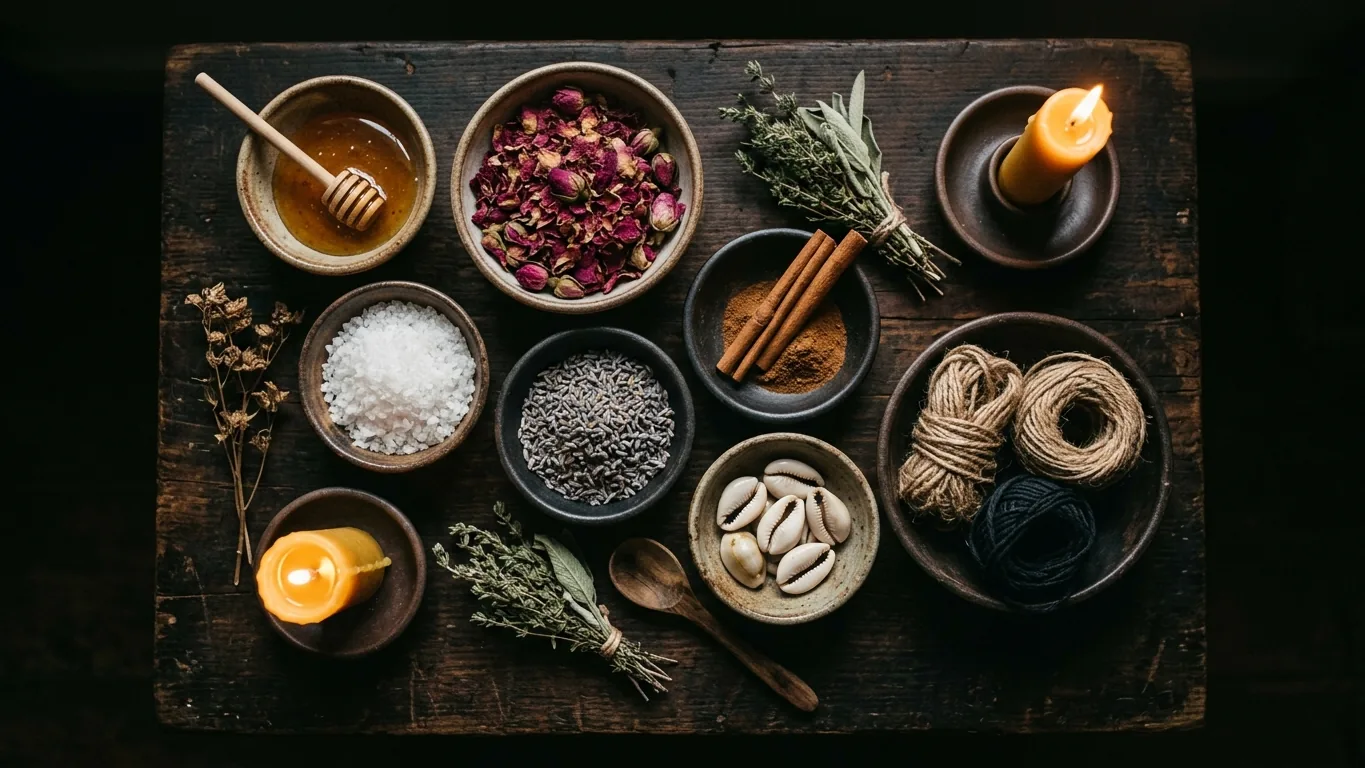
Love work across African and diaspora traditions uses a fairly small set of materials again and again: something sweet, something warm, something that binds, something that cleans and something that draws. This glossary explains the ingredients you are most likely to hear about, what they stand for, and where they come from. It also includes safety notes, because several popular ingredients can burn skin or cause harm if misused.
This is a reference, not a recipe book. Baba Ali Musa chooses materials for each case during the ritual, and you never need to buy anything to work with Baba Ali. That is what “materials only” covers.
Sweeteners
Sweetness is the most common idea in love work. The goal is to soften a person’s feelings toward you, calm arguments and bring warmth back into a relationship that has gone bitter.
- Honey
- The classic sweetener. Honey is used in jars, on candles and in offerings. It stands for sweetness that lasts, because honey does not spoil. The honey jar, a Southern Hoodoo practice, is the best-known example. See Honey Jar Sweetening Spell.
- Sugar
- Used like honey, often in sprinkles, baths and syrups. Some practitioners prefer brown sugar for warmth and white sugar for gentleness.
- Molasses and syrup
- Thicker sweeteners used when a situation needs slow, steady softening rather than a quick change.
Flowers and herbs
- Rose
- Petals, buds, oil and rosewater all appear in love work. Red roses for passion, pink for tenderness, white for peace and new beginnings.
- Lavender
- Calm, peace and gentle attraction. Often used when a relationship is full of anxiety or constant arguing.
- Basil
- Used for household peace and loyalty in several traditions, especially Mediterranean and Caribbean folk practice.
- Cinnamon
- Warmth, speed and passion. A small amount goes a long way. Safety: cinnamon oil and even strong cinnamon powder can burn skin and eyes. Never put cinnamon oil directly on skin.
- Orris root
- A powdered iris root, sometimes called “Queen Elizabeth root” in Hoodoo, used to draw a partner closer and keep their attention.
- Damiana and patchouli
- Herbs associated with desire and physical attraction. Often used in attraction work.
- Rue
- A strong cleansing and protective herb used in Latin American, Mediterranean and Caribbean practice. Safety: rue is toxic if eaten and should never be used by anyone who is pregnant or trying to conceive, even in baths.
- Hyssop
- A cleansing herb with Biblical roots, from Psalm 51: “Purge me with hyssop, and I shall be clean.” Used in spiritual baths to wash away guilt and heaviness. The cleansing baths guide explains how.
Things that bind and connect
Binding in love work means tying two people’s paths closer together, not tying up a person’s will. Baba Ali explains the line in the ethics guide.
- Cord, ribbon and thread
- Red cord is the most common, for passion and connection. Knots are tied with a prayer or intention for each. See Binding Love Spells.
- Lodestone
- A naturally magnetic stone (magnetite). In Hoodoo, a pair of lodestones is used to draw two people together, and they are “fed” with magnetic sand to keep their pull strong.
- Dolls and figures
- A doll or figure candle stands in for a person so that prayer can be focused on them. In real practice this is about connection and healing, not pins and pain. See Voodoo Doll Love Ritual.
- Names and petitions
- A handwritten name or short prayer, often written on paper and placed under a candle or inside a jar. It focuses the work on the right people.
Things that clean and protect
- Salt
- Used almost everywhere for cleansing and protection. Sea salt in baths, a line of salt at a door, salt water to wash an object.
- Florida Water
- A citrus-scented cologne created in New York in the early 1800s and later sold under the Murray & Lanman name, now used widely in Caribbean and Latin American spiritual practice for cleansing, blessing and offerings.
- Cascarilla
- Chalk made from powdered eggshell, used in Afro-Cuban and related traditions for protection and purity.
- Uncrossing oils and baths
- Blends used to remove heaviness, bad luck or someone else’s interference before new love work starts. See Uncrossing & Cleansing for Love.
West African materials
- Cowrie shells
- Small shells once used as currency across West Africa and still used for divination in several traditions. They stand for wealth, fertility and a connection to the ancestors.
- Gris-gris
- A protective charm, usually a small cloth bag holding verses, herbs or other items, known across West Africa and in New Orleans.
- Kola nut
- Shared as a sign of welcome, respect and agreement in many West African cultures, and sometimes offered in prayer.
Candles
Candles deserve their own guide, because color, shape and timing all matter. Read the candle magic guide. In short: red for passion, pink for tenderness, white for clearing and peace.
Safety notes in one place
- Never eat or drink any ingredient from a spell, even if it is normally edible.
- Dilute oils before they touch skin, and test on a small patch first. Cinnamon, clove and pepper oils burn.
- If you are pregnant, trying to conceive or breastfeeding, avoid rue, pennyroyal and strong essential oils entirely.
- Keep herbs and oils away from children and pets.
- If you have a medical condition, ask your doctor before using herbal baths.
If a “spell caster” asks you to swallow something, put something on a partner without their knowledge, or buy expensive rare ingredients, stop. The scam warning signs guide explains why.
Oils and waters
- Rose water and orange blossom water
- Gentle floral waters used to sweeten baths, anoint a doorway or freshen an altar. Both are also used in cooking across North Africa and the Middle East, which makes them easy to find.
- Love-drawing oils
- Blends of herbs and fragrance in a carrier oil, used to dress candles or, well diluted, as a personal scent. Recipes vary by practitioner and are often family knowledge.
- Carrier oils
- Olive, almond, sunflower or jojoba oil. Essential oils should always be mixed into a carrier before touching skin; a few drops per tablespoon is a common starting point.
- Holy water
- Blessed water from a church, used by many Catholic and Protestant clients who combine prayer with folk practice.
Stones
- Rose quartz
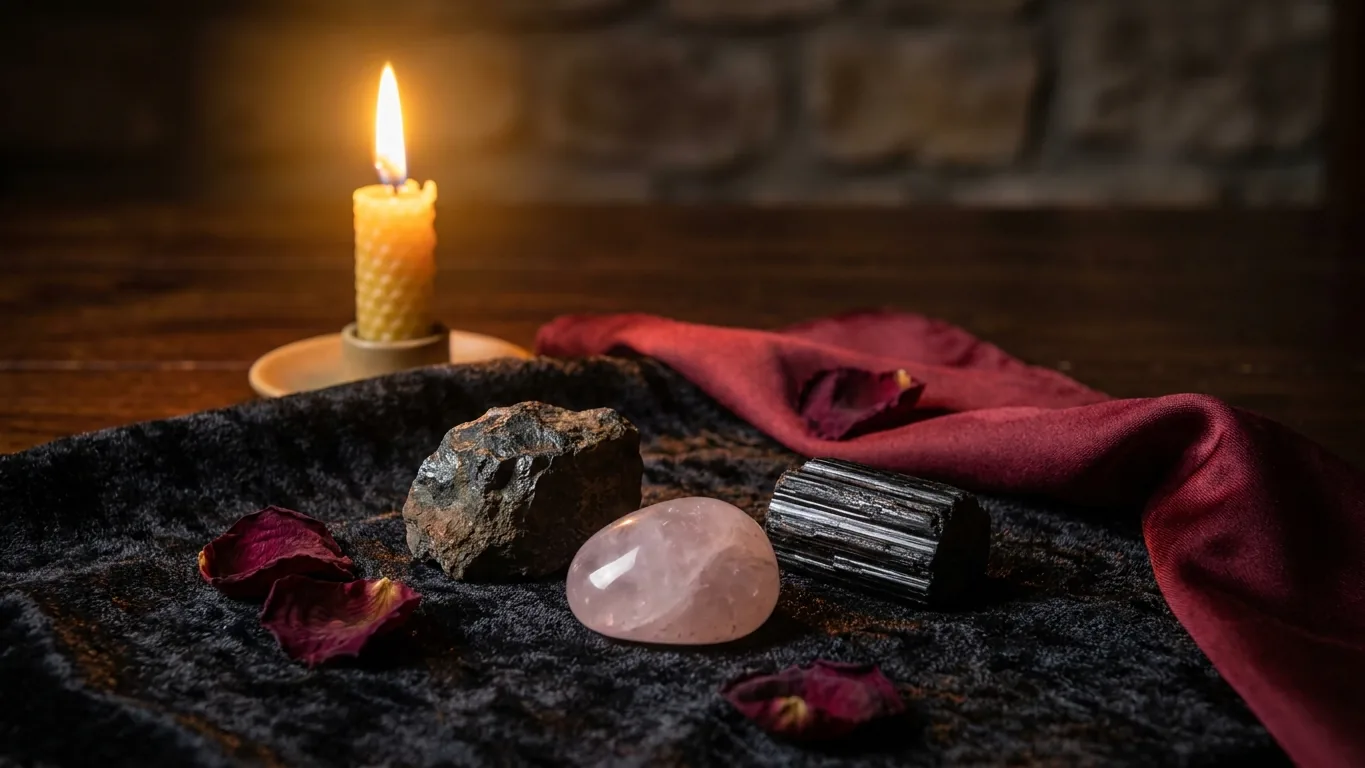
- A pale pink crystal popular in modern love practice for self-love and gentle attraction. Its use is newer than most ingredients on this page, but many clients find it comforting to keep nearby.
- Pyrite and magnetic sand
- Used alongside lodestone. Magnetic sand “feeds” a lodestone; pyrite is associated with drawing luck and attention.
Where ingredients come from
Most love work ingredients are ordinary: honey from the grocery store, roses from a florist, salt from the kitchen, herbs from a garden or a spice aisle. Botánicas and spiritual supply shops sell dressed candles and oils. Be wary of anyone selling “specially blessed” or “rare” ingredients at high prices. The care taken in the ritual matters far more than where the honey came from.
Questions about ingredients
Do I need to buy ingredients to work with Baba Ali?
No. Baba Ali sources and prepares all materials. You cover the cost of materials only; there is no spell fee.
Can I use these ingredients at home?
Many people use honey, rose, salt and simple baths at home. Follow the safety notes above.
Are rare ingredients more powerful?
No. Most love work uses common materials. Rarity is often a sales tactic.