
Bring them back
Honey Jar Sweetening Spell
The classic sweetening jar: your names sealed in honey to soften anger, coldness and bitterness between you. Slow, steady and kind.
Results in 3–7 days, or your money back. Guaranteed.
- Private & confidential
- Adults 18+ only
- Discreet billing
A honey jar sweetening spell is one of the best-known rituals in love work: your first names are written together, sealed in a jar of honey with sweetening herbs and rose, and warmed by candles over weeks, so a partner who has turned bitter, cold or angry becomes sweet toward you again. Baba Ali Musa prepares and tends the jar at the altar, burning a candle on its lid on set nights of the growing moon. It is slow and steady rather than dramatic, and that is its strength. The reading is free, you pay for materials only, and most clients see the first signs within 3–7 days. If you don’t, you get a full refund.
Where the honey jar comes from
Sweetening with honey is found across West Africa and throughout the diaspora. In Hoodoo, the African American folk practice of the American South, the honey jar, also called a sweetening jar, became one of the most common forms of love work. The idea is old and simple: what is sweetened becomes sweet toward you. Baba Ali’s version keeps that core and adds the reading, the timing and the herbs of Baba Ali’s own lineage.
Honey jar or reconciliation spell?
The two are related. Reconciliation work uses a honey jar as part of a ritual focused on constant fighting. The honey jar sweetening spell on its own is gentler and longer-running, for coldness, bitterness or distance rather than open conflict. It is also often used alongside other work, to keep a relationship sweet while deeper work settles.
Who this spell helps
- A partner who has become cold, short-tempered or bitter.
- An ex who is angry with you and will not soften.
- Couples where resentment has built up quietly.
- Anyone wanting kindness back in a relationship.
“Honey does not shout. It softens slowly, and what it softens stays soft.”Baba Ali Musa
How Baba Ali prepares the jar
Writing the names
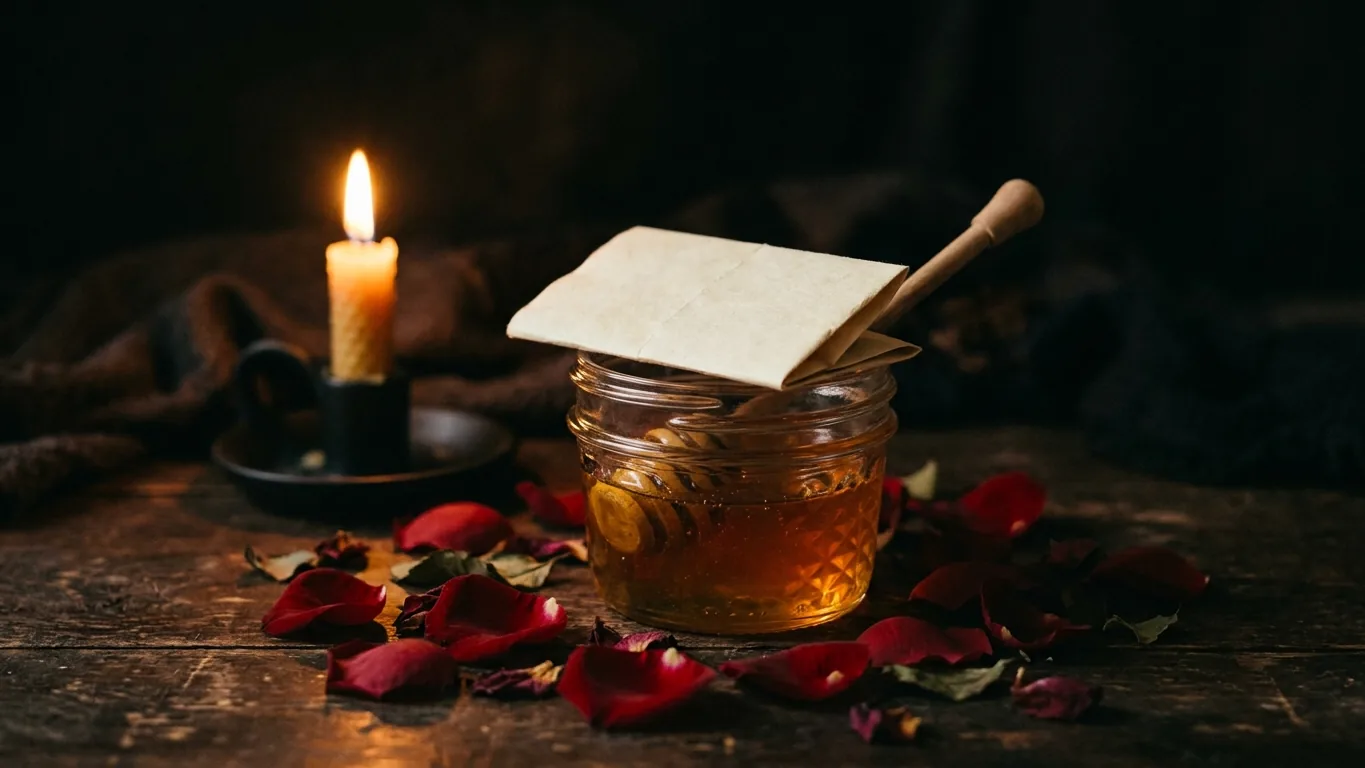
Your two first names are written on paper, crossed and folded toward each other, the way you want two hearts to turn.
Sealing the jar
The paper is placed in honey with rose petals and sweetening herbs, and the jar is sealed.
Tending the jar
A candle is burned on the lid on set nights of the growing moon. The jar is tended for as long as your case needs, and your tracker notes each burning.
Results in 3–7 days, or your money back. Guaranteed.
- Private & confidential
- Adults 18+ only
- Discreet billing
What you provide
- Your first name and date of birth
- The other person’s first name
- What has turned bitter between you
The materials and what they mean
- Honey is the heart of the ritual: sweetness.
- Rose petals ask for tenderness and love.
- Sweetening herbs from the tradition strengthen the effect.
- The folded names ask two hearts to turn toward each other.
- The candle on the lid warms the jar and keeps the work alive.

What results look like
Sweetening shows up as softening: a kinder message, a warmer tone, anger fading, a partner who starts being nice to you again. It tends to build steadily over weeks.
Most clients see the first signs within 3–7 days. If you don’t, you get a full refund.
Myths about honey jars
“A honey jar works overnight.”
It works slowly and steadily. First signs come within days; the sweetness builds over weeks.
“You must keep the jar forever.”
The jar is tended as long as your case needs. Baba Ali tells you when the work is complete.
Related work
- Constant fighting: Reconciliation Spell
- A partner who went cold: Binding Love Spells
- A simple candle ritual: Love Candle Ritual
What this spell will not do
- It is never used to keep anyone in a harmful relationship.
- It is not cast involving minors, abuse, protective orders, or someone who has asked you to stay away.
- It does not come with a promise about another person’s feelings.
Results in 3–7 days, or your money back. Guaranteed.
- Private & confidential
- Adults 18+ only
- Discreet billing
Signs you may need sweetening work
- Every conversation turns sharp or sarcastic, even about small things.
- Your partner or ex answers, but coldly, with one-word replies.
- Old grievances keep coming up long after they should have faded.
- You feel you are walking on eggshells around someone you love.
- An ex speaks badly of you to friends, and you want the anger to fade.
These are signs of bitterness, and bitterness is what honey is for. If the other person has cut off contact completely, sweetening is still possible, but it is often paired with return work so the softening has somewhere to go.
Why sweetness works as a symbol
Honey is one of the oldest foods people have kept, and it does not spoil when it is sealed. That makes it a natural symbol for love that lasts. It is also slow: it pours slowly, it coats everything it touches, and it cannot be hurried. Sweetening work follows the same pattern. It does not shock anyone into feeling something. It softens, gradually, until a harsh tone becomes a kind one.
In Hoodoo, sweetening jars are made with honey, syrup or sugar, and they are used for all kinds of relationships: a lover, a boss, a family member, a landlord. On this site the honey jar is used for love, but the same principle runs through all of those uses. What is sweetened becomes sweet toward you.
Tending the jar
A honey jar is not made once and put away. It is tended. A candle is set on the lid and allowed to burn down on set nights, and the wax builds up on the jar over time. Many practitioners read that wax the way they read any candle, looking at how cleanly it burned and how the wax fell. Baba Ali tends each jar on the nights of the growing moon and notes each burning in your tracker, so you can see the work continuing even when nothing dramatic is happening.

The jar stays at the altar. You do not need to keep anything at home, and nothing is posted to you unless it is part of your aftercare.
A week-by-week picture
Week one
The reading, then the preparation of the jar: names written and folded, the jar filled and sealed, the first candle burned on the lid. First signs often come within 3–7 days: fewer sharp words, a reply that is warmer than you expected.
Weeks two and three
Sweetness usually builds slowly. Conversations get easier. Arguments end sooner. The other person may start to ask how you are, or mention a good memory.
Week four and beyond
By the end of one growing moon, many clients describe a relationship that feels softer in general, not only in single moments. Baba Ali tells you whether the jar should continue to be tended or whether the work is complete.
Preparing for your reading
Think about what exactly has turned bitter. Is it the way they speak to you, the way they speak about you, or a single event neither of you can move past? Be honest about your own part, too. A reading is private, and honesty helps Baba Ali see where sweetness is most needed. Have both first names ready, and your date of birth.
Honey jar myths about harm
Some people ask whether a jar can be made “sour” instead, to turn someone against another person. Sour jars exist in folk practice, but Baba Ali does not make them. This service is sweetening only, and it is never used to turn anyone against anyone else. If your situation involves a rival, the right tool is clearing interference, which removes influence without harming anyone.
Aftercare
Sweetening works best when you are sweet too. In the weeks after the jar is made, answer harsh words calmly rather than matching them. Say thank you for small kindnesses. Do not bring up the past unless the other person does, and if they do, listen more than you speak.

Many clients like to add a small, private practice of their own: a spoonful of honey in tea in the morning while thinking kindly of the person, or a short prayer in their own words. These are optional, and they carry no rules. What matters most is that your own words and actions line up with what the jar is asking for.
Share any changes you see at your check-in. If you see no change within 3–7 days, you get a full refund.
Sweetening an ex or sweetening a partner
A honey jar works a little differently depending on where things stand. When you are still together, sweetening shows up inside everyday life: fewer sharp words at home, more patience, small kindnesses returning. When the relationship has ended and the other person is angry with you, sweetening works on that anger first. The early signs are quieter: they stop speaking badly of you, reply more politely, or agree to talk. Once the anger softens, drawing-back work has a much better chance, because the other person is no longer defending themselves against you.
Why patience matters with sweetening
Honey is slow, and so is this work. People who come expecting a sudden change sometimes miss the real one, which tends to be gradual: one warmer message, then a calmer phone call, then a conversation that does not end in an argument. It helps to keep a short note of what you notice each week. Looking back after a month, many clients are surprised by how far things have moved. Rushing, on the other hand, tends to undo the progress. Pushing for a big talk or a quick answer can make the other person defensive again.
Signs the jar is working
- Replies come faster and sound less guarded.
- Sarcasm and sharp remarks fade.
- Old grievances come up less often.
- The other person asks how you are, or mentions a good memory.
- Friends tell you the other person has spoken of you more kindly.
Share these at your check-in. They help Baba Ali decide how long the jar should be tended.
Sweetness in your own words
The jar speaks for you at the altar, but your own words carry weight too. In the weeks after the jar is made, try to say one kind, true thing to the other person whenever you are in touch: thanks for something small, a compliment, a warm memory. Keep it light and do not expect anything back. Sweetness spreads most easily when it goes both ways, and it often starts with one person deciding to go first.
Honey jar spell: questions
How does a honey jar spell work?
Your names are sealed in honey and warmed by candles so the other person becomes sweeter toward you. Results vary. If you see no change within 3–7 days, you get a full refund under the Refund Policy.
Can I make a honey jar myself?
Many people do. Baba Ali adds the reading, the timing and years of tending jars correctly.
Can it be used on an angry ex?
Yes, as long as they have not asked you to stay away. Sweetening often comes before drawing-back work.
How long is the jar tended?
As long as your case needs, usually at least one growing moon.
How much does it cost?
No spell fee. You pay for the honey, jar, herbs and candles, and you are told the cost first.
Is a honey jar spell safe?
Yes. It is gentle work that asks for kindness and softening. It is never used to harm anyone or to turn anyone against another person.
Can a honey jar be used for a marriage?
Yes. Many married couples use sweetening when resentment has built up. It is often paired with reconciliation work if there is constant fighting.
Do I need to keep the jar at home?
No. The jar stays at Baba Ali’s altar and is tended there.
Can I combine a honey jar with other love work?
Yes. It is often used alongside return or binding work, to keep the relationship sweet while deeper work settles.
Can a honey jar help with an angry ex who has blocked me?
Yes. Sweetening softens anger even without contact, and it often comes before drawing-back work.
Is a honey jar the same as a reconciliation spell?
They are related. Reconciliation uses a honey jar within a ritual focused on constant fighting. The honey jar on its own is gentler and longer-running.
Last updated