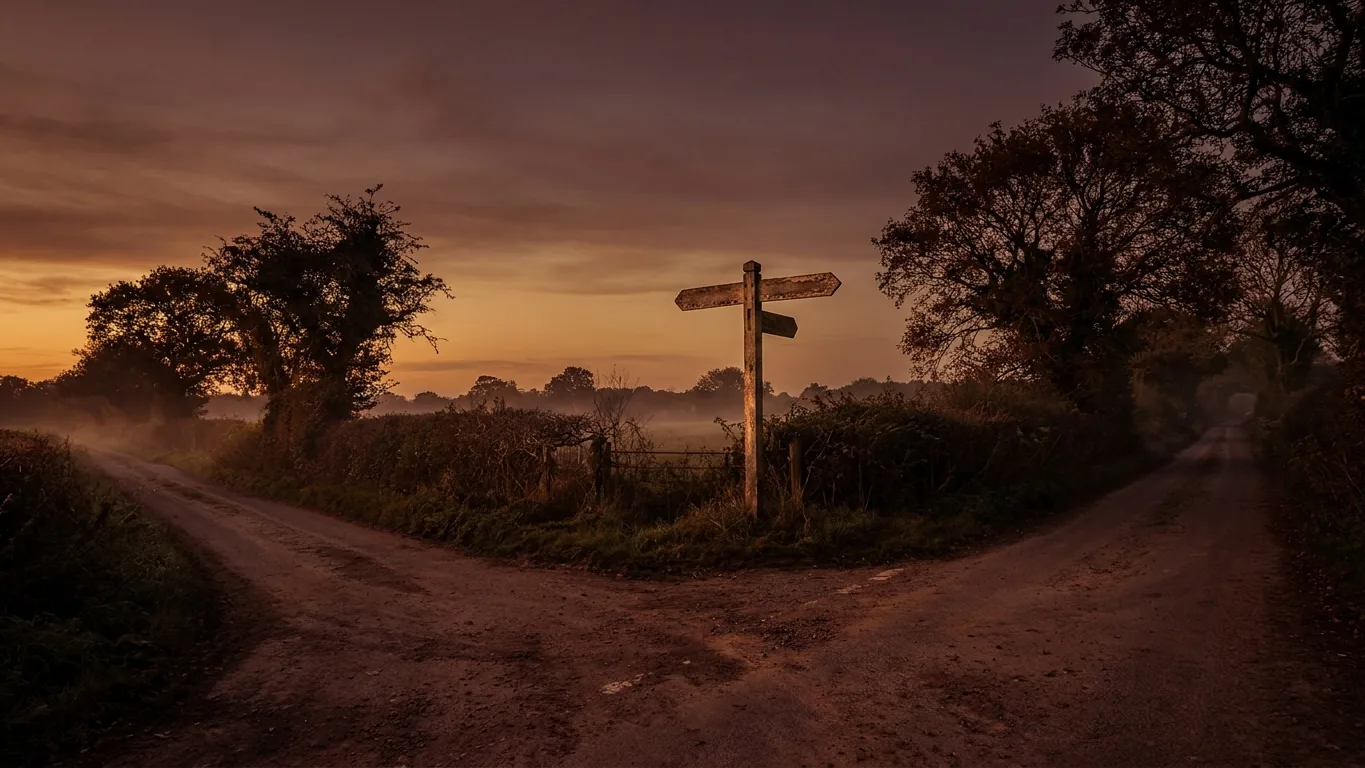
A crossroads is where two roads meet and a traveler has to choose. In many African and diaspora traditions, it is also where the human world and the spirit world meet. Spirits of the crossroads open doors, carry messages and decide who passes. For anyone facing a choice in love, the crossroads is a powerful image: the place where one path ends and another can begin.
This guide explains the crossroads in several traditions, with respect for the communities they belong to, and what the idea means in Baba Ali Musa’s love work.
Papa Legba in Haitian Vodou
In Haitian Vodou, Papa Legba is the guardian of the gate between the living and the spirit world. He stands at the spiritual crossroads and gives, or denies, permission to speak with the spirits. Because of that, he is saluted first in most Vodou ceremonies. Without Legba’s permission, no other lwa can come through.
He is often pictured as an old man with a cane and a straw hat, sometimes with a dog, and is often paired with Saint Lazarus or Saint Peter, who holds the keys to heaven. He is patient, wise and fond of children. His role is to open the way. Source: Papa Legba (Wikipedia).
Legba belongs to Vodou. Baba Ali does not call on him. But the lesson he carries is universal: before anything else can happen, a door has to open.
Eshu and Elegba in Yoruba tradition
In the Yoruba religion of Nigeria and Benin, and in its diaspora forms such as Santería in Cuba and Candomblé in Brazil, a similar figure is Eshu, also called Elegba or Eleggua. Eshu is the messenger between people and the orishas, the keeper of roads and crossroads, and a trickster who tests intentions. Offerings to Eshu are often made first, so that the message gets through.
Eshu is famous for teaching that the same event can look completely different depending on where you stand. It is a useful lesson in any argument between lovers.
The crossroads in Southern Hoodoo
In Southern African American folk practice, the crossroads carries its own lore. Stories tell of people going to a crossroads at midnight to gain a skill, such as playing guitar, gambling luck or rootwork itself. The best-known version is the legend of the bluesman Robert Johnson, who was said to have met a mysterious figure at a crossroads. Scholars have linked that figure to Legba and Eshu, carried through memory and song.
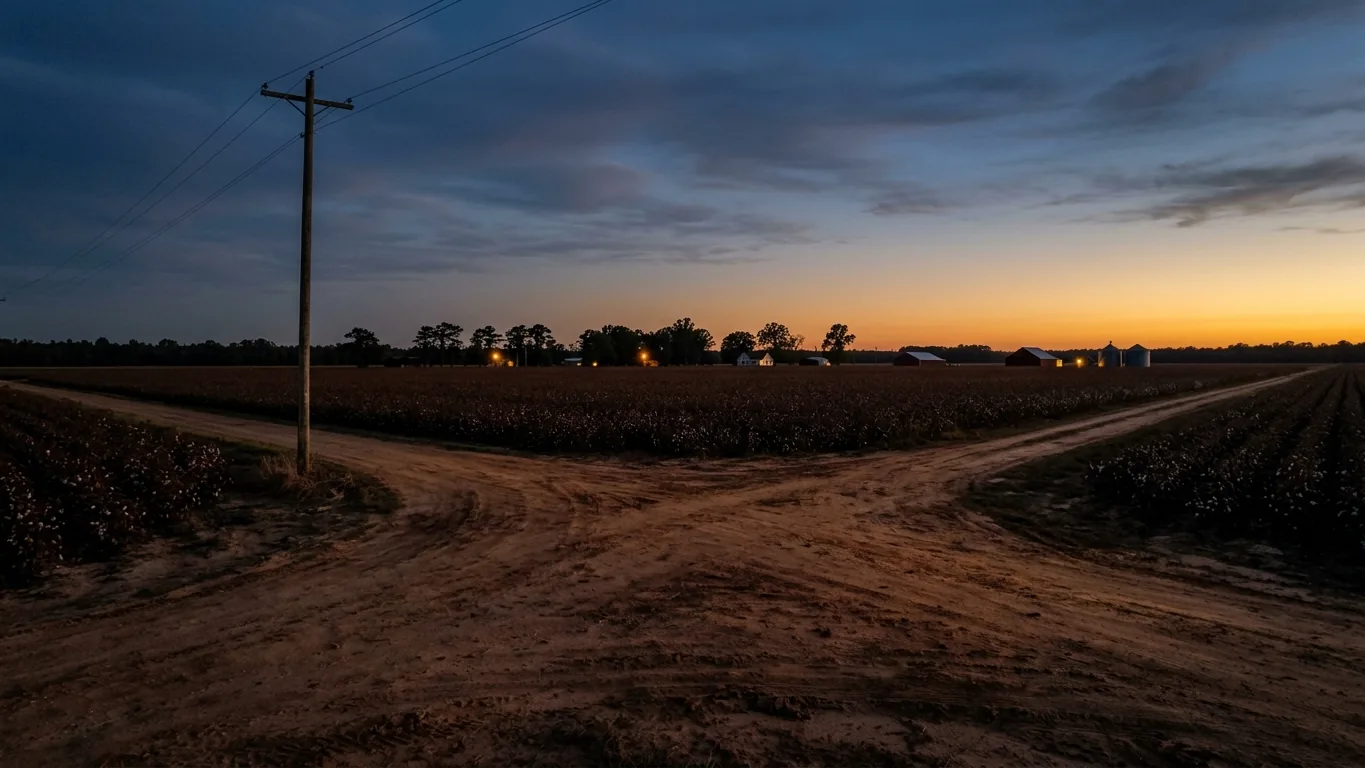
Hoodoo practitioners also use crossroads practically. Remains of a finished ritual, such as candle wax or a used bath, are sometimes left at a crossroads, where the roads carry them away in every direction.
Why the crossroads matters in love
Most people who come to Baba Ali are standing at a crossroads of their own. A partner has left, or is about to. A relationship could heal or end. Someone new has appeared. You can see more than one road ahead and you are not sure which one you are on.
Love work at a crossroads is about three things:
- Opening the way. Clearing what blocks communication: pride, silence, outside interference. See Clear Third-Party Interference and Uncrossing & Cleansing.
- Carrying the message. Softening hearts so that what you feel can reach the other person. See Honey Jar Sweetening.
- Choosing the road. Once the door is open, both people still choose. Love work turns someone back toward you; it does not walk the road for them.
Respecting a choice that is not yours
The crossroads is also a reminder that other people have their own roads. Baba Ali does not take cases where someone has asked the client to stay away, where there is a protective order, where there is abuse, or where a minor is involved. The crossroads is a place of choice, and some choices have already been made clearly. The ethics guide explains where the lines are.
A simple crossroads reflection
If you feel stuck between paths, try this. Draw a simple cross on a piece of paper. At the end of each arm, write one possible future: they come back, you move on, you try again with changes, you wait. Under each, write one honest sentence about what that future would feel like a year from now. Many people discover they already know which road they want. That clarity is exactly what a Love Reading builds on.
Roads and meeting places in West African life
Across West Africa, roads, junctions and markets are where strangers meet, goods and news are exchanged, and journeys begin or end. In many traditions of the region, these meeting places are also understood as spots where the unseen passes, which is why offerings and protective charms are often placed at thresholds, gates and junctions. The idea traveled with enslaved Africans to the Americas, where it took new forms in Vodou, Santería, Candomblé and Hoodoo.
Baba Ali’s Senegalese lineage shares that broad understanding: a threshold is a place of power, and a path, once opened, needs to be walked with care.
Standing at your own crossroads after a breakup
If you feel stuck, it may help to name the roads in front of you honestly. Most people are choosing between some version of these:
- Return. You want the relationship back and believe it can work. See Return Lost Lover Spell.
- Repair. You are still together, but something is broken. See Reconciliation Spell.
- Release. You need to let go and heal so you can love again. See Heal a Broken Relationship.
- Something new. You are ready to meet someone else. See Soulmate Spell.
None of these roads is wrong. Choosing one clearly is often the first real step forward, and it makes any spiritual work that follows more focused.
The crossroads in blues and folklore
The crossroads also runs through American music and storytelling. The best-known example is the blues legend that a guitarist met a mysterious figure at a Mississippi crossroads at midnight and came away with extraordinary skill. The tale attached itself to Robert Johnson, though earlier versions were told about other musicians. Folklorists connect it to older African American beliefs in which a person went to the crossroads to learn a skill from a spirit, beliefs recorded in the Hoodoo interviews that Harry Middleton Hyatt collected in the twentieth century (crossroads folklore).
Later retellings often turned the figure at the crossroads into the devil. That reading owes more to fear and to Hollywood than to the traditions themselves. In West African and diaspora practice, the spirit of the crossroads is a gatekeeper and a teacher, not a tempter. The story endures because it holds a true idea: the crossroads is where a life can change direction.
Questions about the crossroads
Is the crossroads spirit the devil?
No. That idea came from outsiders misreading African traditions. Legba and Eshu are messengers and gatekeepers, not devils.
Does Baba Ali work with Papa Legba?
No. Legba belongs to Haitian Vodou. Baba Ali works within a Senegalese lineage.
Do I need to go to a crossroads?
No. Clients are never asked to go anywhere at night or do anything unsafe.
How soon can a blocked situation open?
Most clients see the first signs within 3–7 days. If you don’t, you get a full refund under the Refund Policy.