Erzulie Freda (also spelled Ezili Freda) is one of the lwa, or spirits, of Haitian Vodou. She rules love, beauty, romance, luxury and longing. People turn to her for help with relationships and for the kind of love that makes life feel worth living. She is also known for her sorrow, because the love she wants is never quite enough.
This guide explains who she is in the tradition. It is written with respect for Haitian Vodou, which is its own religion with its own priests. Baba Ali Musa’s practice comes from a Senegalese lineage and does not claim to serve Erzulie or any lwa.
Who Erzulie Freda is
In Haitian Vodou, Bondye, the creator, is distant. The lwa are the spirits people actually talk to, each with a personality, a domain and favorite things. Erzulie Freda belongs to the Rada family of lwa, which are generally considered cool and gentle, rooted in the traditions of Dahomey (today’s Benin).
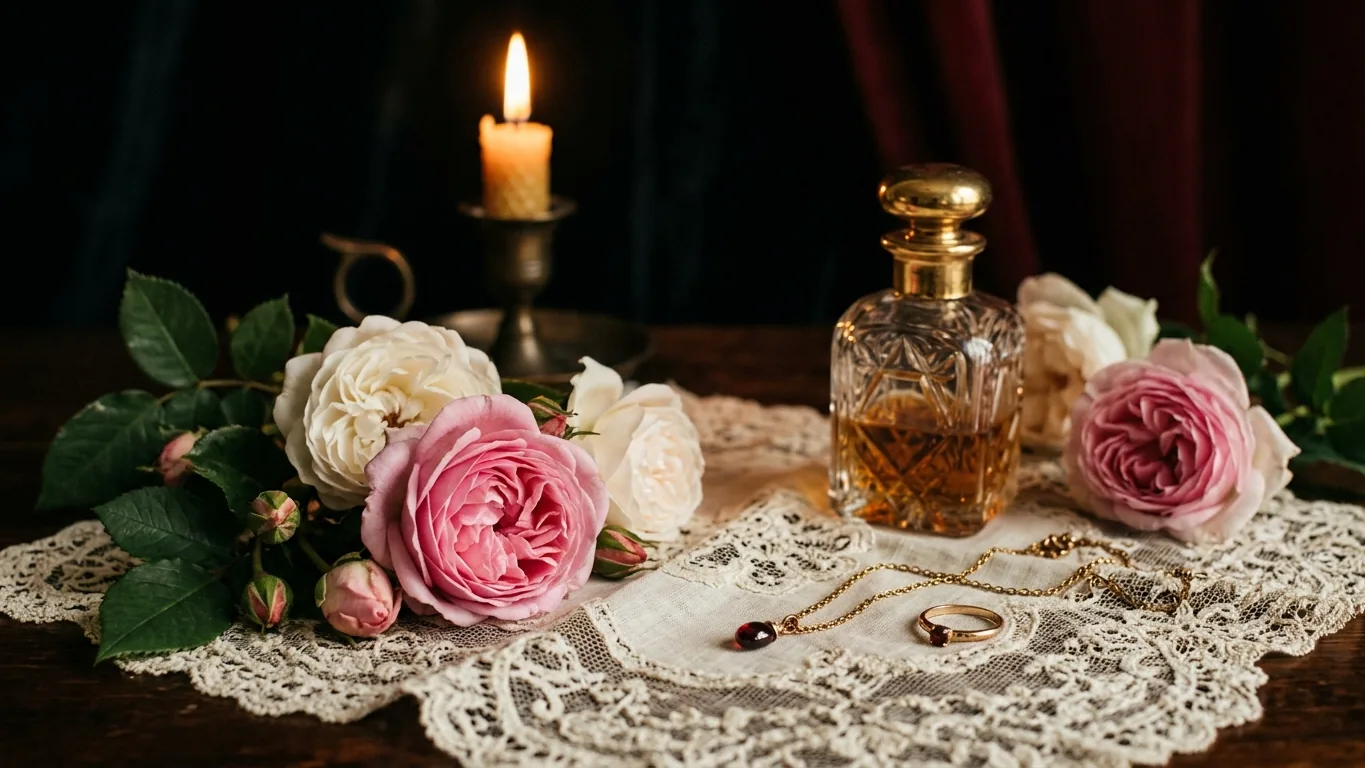
She is usually described as a pale, elegant, well-dressed woman who loves fine things: perfume, jewelry, flowers, sweet cakes, good liqueur and clean white linen. When she arrives in a ceremony, the people serving her make sure everything is beautiful and fresh. She is flirtatious, generous and demanding at once.
According to common accounts of the tradition, her colors are pink, blue, white and gold, her symbol is a heart, and she wears three wedding rings, one for each of her husbands among the lwa: Damballa, Agwe and Ogou. Source: Erzulie Freda (Wikipedia, with references to ethnographic sources).
Why she weeps
The most famous thing about Erzulie Freda is that she often leaves a ceremony in tears. The American filmmaker and writer Maya Deren, who studied Vodou in Haiti in the 1940s and 1950s, described this in her book Divine Horsemen: The Living Gods of Haiti (1953). No matter how much love and luxury she is given, it is never enough to match what she dreams of.
Many people find her comforting for exactly that reason. She understands longing. She knows what it is to love fully and still feel the gap between what is and what should be. If you have ever loved someone who could not give you what you needed, her story is familiar.
Her image and her sisters
Under slavery and colonial rule, Vodou practitioners paired the lwa with Catholic saints, partly for protection and partly because the images fit. Erzulie Freda is often shown as the Mater Dolorosa, the sorrowing Virgin Mary with a heart pierced by a sword. That image captures both her love and her grief.
Erzulie is also a family of spirits, not one. Two of the best known are:
- Erzulie Dantor, a fierce protective mother, often associated with the Black Madonna of Częstochowa. She defends women and children, and she is known for her strength and her temper.
- Erzulie Ge-Rouge (“red eyes”), a darker side of heartbreak and rage, the moment when longing turns into pain.
Together they show love as it really is: tender, jealous, generous, grieving and protective.
Marriage to a lwa
One practice that surprises outsiders is that some Vodou practitioners marry a lwa in a ritual called a maryaj lwa. A man might marry Erzulie Freda, promising her a day of the week when he sleeps alone and keeps himself for her. In return, she looks after his luck and his heart. This is a serious religious commitment made within a Vodou house, with a priest, not something to try from a website.
How to approach her tradition with respect
Erzulie Freda has become popular far outside Haiti. Her image appears on candles, oils and social media posts from people with no connection to Vodou. If you feel drawn to her, a few principles help.
- Learn from Haitian voices. Books by Haitian scholars and practitioners, and ethnographies like Karen McCarthy Brown’s Mama Lola: A Vodou Priestess in Brooklyn (1991), are better guides than online spell kits.
- Do not copy her vèvè. Each lwa has a sacred ritual drawing called a vèvè. These are used to call the spirit in ceremony, not as decoration. This site never reproduces them.
- Seek a real house. If you want to serve Erzulie, find a Haitian houngan or mambo with a genuine lineage. Serious priests will ask questions and may tell you no.
- Be wary of anyone who sells her. A stranger who claims to “summon Erzulie” for a fee and a promise is almost always a scam.
What this means for your love work
Baba Ali does not call on Erzulie Freda. The love work Baba Ali performs uses candles, honey, cords, herbs, prayer and the timing of the moon within a Senegalese lineage. But the themes she represents run through every consultation: longing, pride, jealousy, tenderness and hope.
If your situation is about heartbreak and the hope of a return, Spells to Get Your Ex Back or Honey Jar Sweetening Spell may fit. If you are not sure, start with a Love Reading. The What Is Voodoo guide explains how the traditions fit together.
Erzulie beyond Haiti
Haitian migration carried Erzulie to Miami, New York, Montreal and Paris, and her image now appears far outside Vodou temples. In New Orleans, where refugees from Saint-Domingue arrived in large numbers in the early 1800s, Haitian influence blended into Louisiana Voodoo alongside Catholic saints and local practice. Today you can find her picture in botánicas, on seven-day candles and across social media.
That spread is not always respectful. Some sellers present her as a love charm that anyone can command for a fee. In the tradition, it works the other way around: people serve the lwa, and the relationship is built over years, inside a community, with guidance from priests who know her.
What her story teaches about love
Even if you never set foot in a Vodou temple, Erzulie Freda’s story holds lessons that clients recognize immediately.
- Love wants to be honored. She is given beauty, care and attention. Relationships starve without the same.
- Longing is not weakness. Her tears are not a failure. They are what it costs to love deeply.
- Love has many faces. Tender Freda, fierce Dantor and heartbroken Ge-Rouge are all Erzulie. Your own love can be gentle, protective and wounded at once.
- Jealousy is part of the picture. Freda is known to be jealous of rivals. Admitting jealousy honestly is healthier than pretending it is not there.
Where to learn more
If you want to understand Erzulie Freda and Haitian Vodou more deeply, read people who have studied and lived it. Maya Deren’s Divine Horsemen: The Living Gods of Haiti (1953) remains a classic account. Karen McCarthy Brown’s Mama Lola: A Vodou Priestess in Brooklyn (1991) follows a Haitian priestess in New York and shows how the lwa, including Erzulie, are part of everyday life and love.
Questions about Erzulie Freda
Is Erzulie Freda a goddess?
In Vodou she is a lwa, a spirit who serves under Bondye, the one God. “Goddess” is a common but imprecise label.
Does Baba Ali work with Erzulie?
No. Baba Ali’s lineage is Senegalese. Serving a lwa belongs within Haitian Vodou, with a houngan or mambo.
Can I put her picture on my altar?
Many people do. If you want a real relationship with her, learn from Haitian practitioners and treat the image with care. Avoid copying her vèvè.
Someone offered to summon Erzulie for me. Is that real?
Be careful. Real Vodou priests do not sell summonings to strangers online. See the scam warning signs.