
A honey jar spell, also called a sweetening jar or sugar jar, is a Southern Hoodoo practice for softening how someone feels toward you. A written petition with the names of the people involved is placed in a jar of honey or sugar, often with herbs, and the jar is sealed. Candles are then burned on the lid over days or weeks while the practitioner prays for sweetness. It is gentle, patient work, best suited to cold, tense or angry situations rather than to chasing a quick result.
This post explains where the honey jar comes from, how it works step by step, what it can and cannot do in love, how it compares with other love work, and a gentle version you can make at home for peace in your own life.
Why honey?
Honey is one of the oldest symbols of sweetness in human culture. It does not spoil. It draws and holds. It turns bitterness gentle. Across West Africa, honey and sweet foods have long been part of offerings, blessings and celebrations. In Yoruba tradition, sweetness is closely linked with Oshun, the orisha of love and rivers. In the Bible, the promised land flows with milk and honey. In everyday speech, we call people we love “honey.”
The logic of the honey jar follows naturally: if honey makes things sweet, then honey held in prayer can sweeten a person’s feelings, a tense household or a hard situation.
Roots in Southern Hoodoo
The honey jar as we know it comes from Hoodoo, the spiritual practice that grew among Black Southerners from West and Central African roots, blended over time with Christianity and other influences (Hoodoo). Rootworkers, also called conjure doctors, kept knowledge of herbs, roots, powders and prayers, and passed it down through families and apprenticeships.

In the twentieth century, writers began documenting these practices. The novelist and anthropologist Zora Neale Hurston studied Hoodoo in New Orleans and recorded what she learned in Mules and Men (1935), including stories of Marie Laveau and the specialties of different practitioners (Mules and Men). Later folklorists collected thousands of Hoodoo practices from across the South. Sweetening work, using sugar, syrup and honey, appears again and again in that record.
During the Great Migration, Hoodoo traveled north and west with millions of Black Southerners, and honey jars went with it into city apartments from Chicago to Los Angeles.
What a honey jar is used for
Sweetening is flexible. Honey jars are traditionally used to:
- Soften a partner who has become cold, angry or distant.
- Calm constant arguing in a relationship.
- Warm an ex toward reconciliation.
- Improve relationships with family, in-laws or coworkers.
- Ease tension in a household.
In love work, it is most often used when two people are still in some contact but everything feels bitter. It is less suited to situations with no contact at all, where return work usually comes first.
How a honey jar works, step by step
Practices vary between families and practitioners. What follows is the general shape that most honey jars share. When Baba Ali Musa performs sweetening work, the specifics stay at the altar.
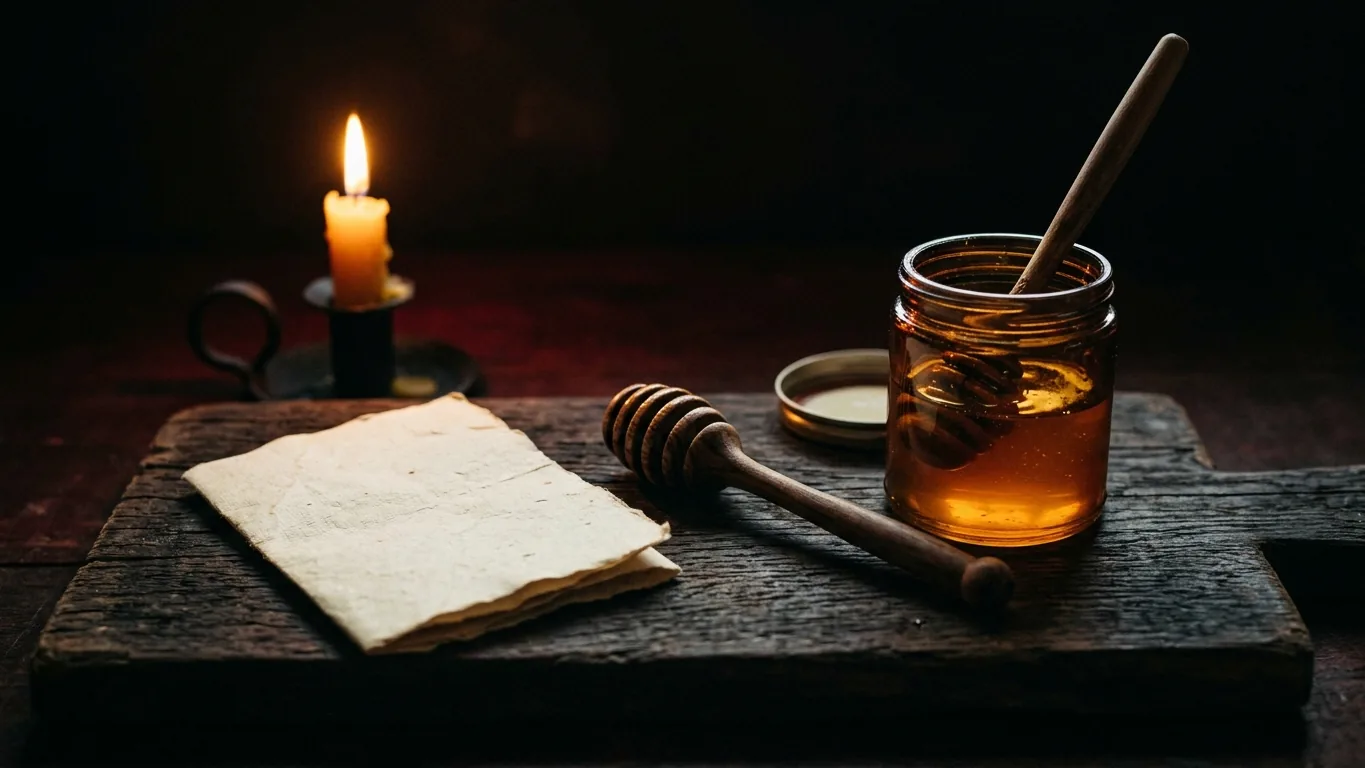
1. The petition
A small piece of paper is written with the name of the person to be sweetened. In many Hoodoo traditions, the paper is turned and the practitioner’s or client’s name is written across it, so the names cross. Around the names, a short wish may be written in a continuous circle.
2. Folding
The paper is folded toward the person doing the work, a gesture of drawing something closer. Some practitioners add a pinch of herbs inside the fold, such as rose petals or lavender.
3. Into the jar
The folded petition goes into a jar of honey, sugar or syrup. Often a spoonful is tasted first, with a spoken prayer along the lines of: as this honey is sweet to me, so may [name] be sweet to me.
4. Sealing
The jar is closed tightly. The sweetness is now held around the names.
5. Candles on the lid
Small candles, often pink, red or white, are burned on top of the lid, sometimes daily and sometimes on set days, with prayer each time. Wax builds up on the lid over weeks, which many practitioners see as a record of the work.
6. Patience
Honey jars are slow work. They are kept and tended over time, not finished in a night.
Sweetening does not shout. It works the way honey does: slowly, steadily, and it lasts.
Honey, sugar or syrup?
Each sweetener carries a slightly different feel in tradition:
- Honey for lasting, natural sweetness. The most common choice for love.
- White sugar for gentle, clean sweetness, often for peace between people.
- Brown sugar or molasses for warmth and slow, deep softening.
- Syrup for smoothing difficult conversations.
Some practitioners avoid honey when working with people who have strong feelings about bees or allergies, or for religious reasons, and use sugar instead. The meaning is the same.
Herbs commonly added
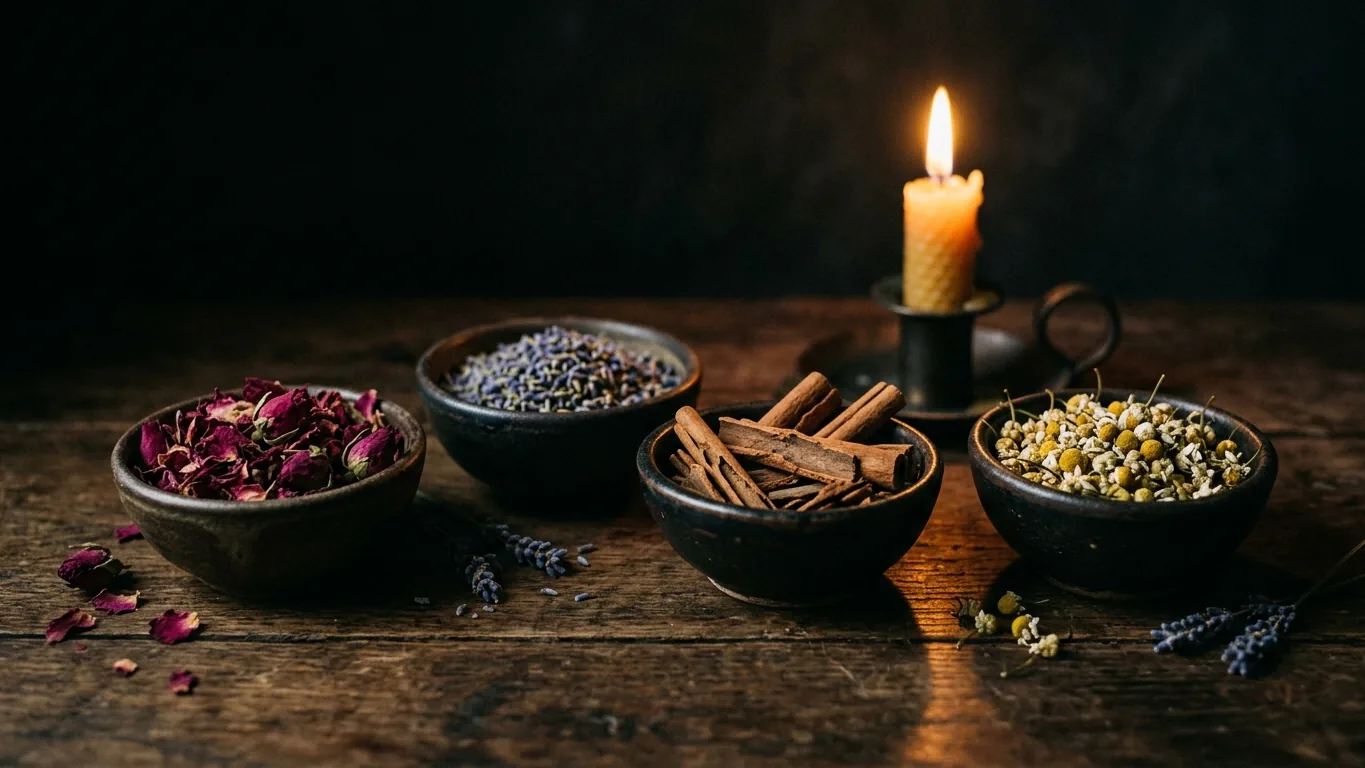
Herbs add a particular quality to the sweetness. Rose for love, lavender for peace, cinnamon for warmth and speed, basil for loyalty and household harmony, and orris root to keep someone’s attention. The ingredients glossary explains each, including safety notes.
Why jars, specifically?
The jar itself carries meaning. A sealed container holds and protects what is inside, keeping the sweetness gathered around the names rather than scattered. Jars are also ordinary household objects, which suits a tradition that grew in kitchens and back rooms rather than temples. A clean glass jar with a tight lid is all that is needed. There is nothing special to buy.
What a honey jar can do
- Soften anger and coldness over time.
- Make conversations easier and arguments shorter.
- Warm someone’s feelings toward you when a bond already exists.
- Support other love work, such as return or binding, by keeping things sweet.
What a honey jar cannot do
- Take away anyone’s choice.
- Create feelings where none ever existed.
- Make an unsafe relationship safe.
- Work overnight. It is patient work by design.
Our post Do Voodoo Love Spells Really Work? explains the honest limits of all love work.
Honey jar vs other love work
| Work | Best for | Pace |
|---|---|---|
| Honey jar (sweetening) | Coldness, anger, constant arguing | Gradual, over weeks |
| Return | No contact, they have gone quiet | First signs in days |
| Binding | Holding a bond steady | Steady over weeks |
| Clearing | Removing interference | Days to weeks |
Honey jars often work alongside other work. A common pattern is clearing first, then sweetening, then return. Our post sweetening spells for arguments and coldness goes deeper into sweetening specifically.
How long does a honey jar take?
Because sweetening is gradual, signs often start with tone rather than events: a softer reply, a shorter argument, a kinder word. With Baba Ali, most clients see the first signs within 3–7 days, and if you don’t, you get a full refund under the Refund Policy. Deeper softening usually unfolds over several weeks. Our post on how long a love spell takes to work covers timelines.
What happens to the jar afterward?
Traditions differ. Some practitioners keep a honey jar for as long as the relationship needs sweetness, adding candles when things feel tense. Others close the work once its purpose is fulfilled and dispose of the jar respectfully, often by burying it. What is never done is to break or throw away a jar carelessly while the work is active.

Fire safety for jars and candles
Burning candles on a jar lid is a real fire risk if done carelessly. The National Fire Protection Association reports that candles were the heat source for 2% of reported US home fires. Use small candles, set the jar on a heat-safe plate, keep it at least 12 inches from anything flammable, never leave it burning unattended, and never burn candles while you sleep.
A gentle honey jar for your own peace
Many people like to make a simple sweetening jar at home. Rather than aiming it at another person, a good way to start is a jar for peace and sweetness in your own life. That is gentle, safe and useful for anyone going through heartbreak.
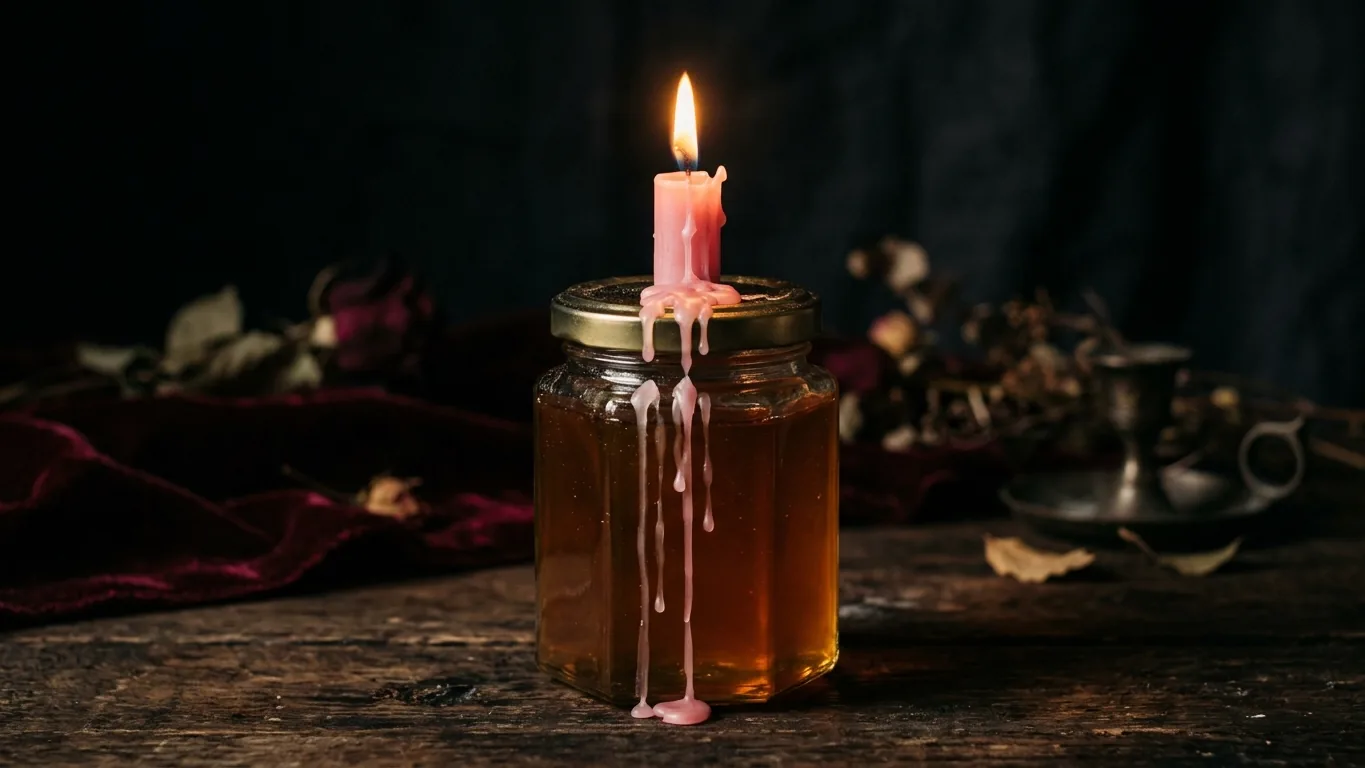
- Write your own name on a small piece of paper, and around it words like “peace,” “love,” “calm,” “sweetness.”
- Fold it toward you and place it in a small jar of honey or sugar with a few rose petals.
- Taste a little honey and say, in your own words, that you welcome sweetness back into your life.
- Close the jar. On hard days, burn a small white or pink candle on a plate beside it and sit quietly for a few minutes.
This is not the same as the love work Baba Ali performs, and it is not meant to work on anyone else. It is a way to care for yourself, and many clients find it steadying while other work settles. Our post on self-love rituals has more ideas.
Honey jars for different relationships
Sweetening adapts to many kinds of love. With a current partner who has grown distant, it softens irritation and brings back small kindnesses. With an ex you are still in touch with, it eases the bitterness that keeps you apart, so that reconnection feels possible. With a spouse in a rough season, it calms the household and makes hard conversations gentler. And with family members who disapprove of your relationship, it can soften their judgment so that they listen rather than oppose. In each case, the aim is the same: less bitterness, more warmth.
What goes on the petition
The petition is the heart of the jar. In general, it names the people involved and states the sweetness being asked for, simply and honestly. Good petitions are specific and kind: “that [name] feel warmth toward me,” “that we speak gently to each other,” “that anger between us ease.” What does not belong on a petition is anything meant to trap, control, punish or harm. Sweetening that turns sour in intent stops being sweetening.
Signs a honey jar is working
Because sweetening is gradual, its signs are usually changes in tone and mood rather than dramatic events. Clients commonly notice:
- Replies that are shorter on anger and longer on warmth.
- Arguments that cool down faster, or do not start at all.
- Small kindnesses: a “take care,” a check-in, a favor offered.
- Humor returning between you.
- A willingness to meet or talk that was not there before.
Write these down with dates. Over a few weeks, the pattern tends to become clear. Our post on signs a love spell is working has more.
Honey jars and faith
Hoodoo has long been practiced by Christians, and honey jars fit comfortably within that. Many rootworkers pray the Psalms over their jars. Psalm 133, about the goodness of people living together in unity, is a natural fit for household peace. Clients of every faith, and of none, use sweetening. What matters is a sincere intention for peace and warmth, not a particular religious label.
How Baba Ali uses sweetening
In Baba Ali Musa’s practice, sweetening is often the quiet partner to other work. When a reading shows anger or pride in the way, sweetening softens it before return work begins. When a couple reconnects, sweetening helps the early days feel easy rather than tense. And when a relationship is intact but worn down, sweetening alone may be all that is needed. The materials are simple: honey or sugar, herbs, a petition and candles. As with all of Baba Ali’s work, you are told what is needed and what it costs before anything is bought, and there is no spell fee.
Why sweetening suits cautious hearts
Many people who come to love work feel uneasy about anything that sounds heavy-handed. They do not want to “bind” anyone; they just want the anger to stop and the warmth to return. For them, sweetening is often the right place to begin. It asks nothing of the other person except that they feel a little kinder. It does not rush. It works on the everyday texture of a relationship: the tone of a message, the length of an argument, the willingness to laugh. And if more is needed later, sweetening makes every other kind of work easier, because softened hearts are more open.
Common mistakes with honey jars
- Expecting speed. Sweetening is slow. That is its strength.
- Stacking bitter behavior on top. A honey jar plus angry messages works against itself.
- Using sweetening where there is abuse. Sweetness is not the answer to cruelty or danger.
- Buying expensive “honey jar kits.” The materials are simple and cheap. High prices are a warning sign.
- Mixing several practitioners’ jars. Too many hands on one situation muddy the work.
Respecting the tradition
The honey jar belongs to Hoodoo, a tradition built by Black Southerners under hard conditions and kept alive in families for generations. It has become popular far beyond that community, which is fine as long as its origins are remembered and respected. Baba Ali’s practice comes from a Senegalese lineage in the same broad West African world that Hoodoo grew from, and sweetening with honey is shared language across these traditions. Our post Voodoo vs Hoodoo vs Santería explains how they relate.
Is a honey jar right for you?
If you are in contact with the person you love but things feel cold, angry or tense, sweetening may be the right place to start. If you have no contact at all, return work usually comes first. If someone else is pulling your partner away, clearing interference may be needed. A free reading tells you which. Read more on the Honey Jar Sweetening Spell page, or book a love reading.
Questions about honey jar spells
What is a honey jar spell?
A Hoodoo sweetening practice: a petition with names is sealed in honey or sugar, and candles are burned on the lid with prayer to soften someone’s feelings.
Does a honey jar work on an ex?
It can soften an ex, especially if you are still in some contact. If there is no contact, return work usually comes first.
How long should a honey jar be kept?
As long as the situation needs sweetness. Some practitioners keep jars for months; others close them once the purpose is fulfilled.
Can I use sugar instead of honey?
Yes. Sugar and syrup are traditional too, each with a slightly different feel.
Is a honey jar the same as a binding?
No. Sweetening softens feelings; binding holds a bond steady. They are often used together.
Can a honey jar backfire?
Sweetening is among the gentlest forms of love work. The main risk is fire from candles, so burn safely.
Can I make a honey jar for my ex myself?
Many people try. If you do, keep the intention kind, burn candles safely, and avoid mixing your jar with work from several practitioners at once.
What if sweetening does not help?
Most clients see the first signs within 3–7 days. If you don’t, you get a full refund under the Refund Policy.