Before choosing a reconciliation spell, you need answers to nine questions. Are you ready for whatever comes back? What are you really asking for? Is the relationship safe? Does the other person still have a real choice? What will actually be done?
What does it cost, in materials only? What happens afterward? What are the refund terms? And is there something else you should try first? If you can answer all nine calmly, you are ready to decide. If you cannot, that is useful information too.
This guide is about the decision, not the practitioner. If you want to know how to spot an honest caster and avoid a scam, our guide on how to choose a real love spell caster covers that in detail. Here we focus on the earlier question: whether reconciliation work is right for you, right now, and how to go into it with clear eyes. Baba Ali Musa has practiced for more than thirty years in a Senegalese ancestral lineage, and the people who do well with this work are almost always the ones who asked hard questions first.
What a reconciliation spell is, and what it is not
A reconciliation spell is sweetening work for a relationship that has been worn down by hurt. It aims to soften anger, pride and coldness so two people can hear each other again. It is not a command, it does not choose for the other person, and it does not remove anyone’s ability to say no. Think of it as preparing the ground. The conversation, the apology and the changed behavior still have to be done by living people.
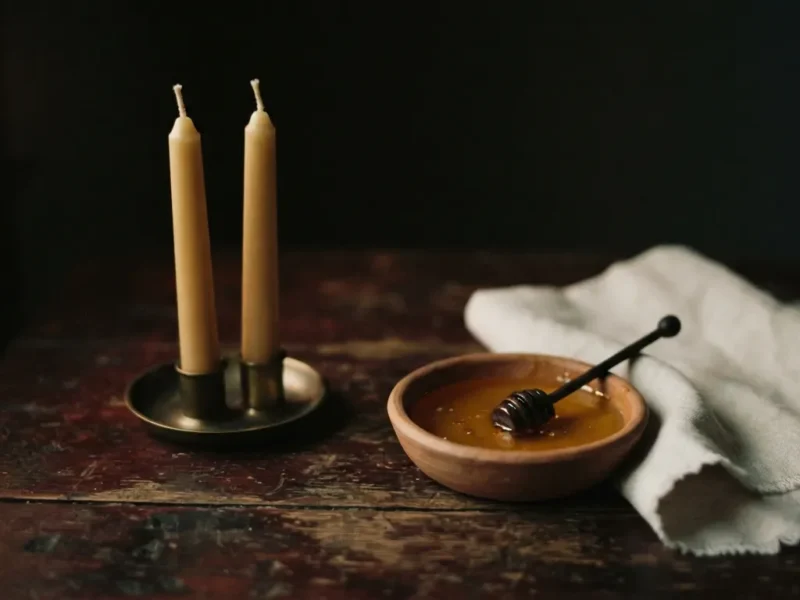
In Baba Ali’s practice, the work centers on a honey jar. Your first names are written together on paper and sealed in honey with rose petals and sweetening herbs. A pink or red candle, carved with both first names, is then burned on the lid over several evenings of a growing moon. Honey is the oldest sweetener in the tradition because it softens what it touches. You can read the full description on the reconciliation spell page.

Reconciliation work is different from a spell built to bring someone back who has gone. If you are still in contact, or the two of you are together but fighting, reconciliation is usually the right starting point. If the other person has left and stopped speaking, you may be looking at return lost lover work or ex-back work, and some of the questions below change. We will come back to those cases later.
Most of what you read online about reconciliation spells explains what they are and how long they take. Fewer pages help you decide whether to do one at all. That is the gap this guide fills, and it starts with you.
Question 1: Am I ready for any answer?
Readiness is the first question because it protects you whatever the outcome. Reconciliation work can lead to a softer conversation, a surprising message, a partial thaw, or nothing you can see. You need to be able to live with all four.
Ask yourself these things honestly:
- If the other person calls tomorrow, can I stay calm and listen instead of pouncing?
- If they stay silent for another month, will I be able to eat, sleep and work?
- If they come back but nothing about the old pattern has changed, would I still want that?
- If they say a clear no, can I accept it and stop?
The last question matters most. Someone who cannot imagine hearing no is not ready, and the work will not fix that. Baba Ali often tells clients that the spell does not decide who is ready. The reading does, and so does a quiet night of honest thinking.
It also helps to know where you are emotionally. If you are in the first raw days after a breakup, your feelings are loud and your judgment is shaky. People in that state often want to do something, anything, to stop the pain. That urge is human. It is also a poor guide for a decision with consequences for another person. If you are in that place, give yourself a week of ordinary life first: sleep, food, walks, a friend who will listen. You will still be able to book work later. A decision made with a settled body is almost always better than one made at three in the morning.
Readiness also covers practical things. Can you keep your own life moving while you wait, or will you refresh your phone every four minutes? Do you have at least one person to talk to who is not part of the conflict? Reconciliation is slow by nature. The first signs are often small shifts in tone, and the real repair takes weeks or months. If you need a result by Friday, no honest practitioner can promise it.
Question 2: What am I actually asking for?
Motive sounds like a lecture, but it is a practical question. “I want them back” can mean at least five different things:
- I want the fighting to stop so we can talk.
- I want an apology, or I want to give one.
- I want to find out whether we still have something.
- I want my old life back, with this person in it.
- I want to win, or to prove I was right, or to stop them being with someone else.
The first three are repair. The fourth is longing, which is understandable and worth looking at gently. The fifth is not reconciliation at all, and an honest practitioner will tell you so. Baba Ali declines requests that come from revenge or from a need to control, and says so in the reading rather than taking your money and hoping.
A good test: imagine the other person back in your life and the two of you sitting at the same table. What is different? If your answer is “we talk like adults, and the old argument finally gets settled,” you are describing reconciliation. If your answer is “they finally see they were wrong and come crawling,” you are describing something else.
It also helps to separate the person from the pattern. Some people discover, while answering this question, that they miss the relationship as it was in its first year, not the person as they are now. Others discover that the real issue was a single recurring argument, about money, or in-laws, or time, that neither of you ever solved. Research on couples by the Gottman Institute has described four habits that predict trouble: criticism, contempt, defensiveness and stonewalling (Gottman Institute). If you see those habits in your own story, softening the ground is only half the job. The habits need attention too, and the aftercare notes Baba Ali gives clients address that from your side.
One more thing about motive. Wanting someone back is not shameful. Loving someone and missing them is not a flaw. The question is only whether what you are asking for is something that can be freely given. Repair can be freely given. Surrender cannot.
Question 3: Is this relationship safe?
This question comes before ethics and before cost, because it can end the discussion. A reconciliation spell is meant for two people who hurt each other with words, silence, pride or distance. It is not meant for a relationship where one person is afraid of the other.
Signs that safety has to come first include physical violence, threats, stalking, being checked on constantly, being cut off from friends, being forced to hand over money or passwords, or feeling that you must keep the other person calm at all costs. If any of that is part of your story, a spell is the wrong tool, and sweetening the relationship could make it harder to leave. Baba Ali declines cases involving abuse, protective orders, minors and requests from someone who has been asked to keep their distance. Those are firm lines, not negotiable ones.
If you are in danger or are not sure whether what you are living with is abuse, the National Domestic Violence Hotline is free, confidential and open at all hours at 1-800-799-7233, or through thehotline.org. Calling does not commit you to anything. It simply gives you someone trained to talk it through.

Safety has a quieter side as well. A relationship can be unsafe emotionally without any violence: constant contempt, lies, betrayal that repeats, or a partner who uses silence as punishment. Reconciliation work does not fix a person who has no wish to change. If the honest history is “we get back together, it is good for three weeks, then the same thing happens,” the useful work may be healing first, with reconciliation considered only after you have decided what you will and will not accept.
A fair question to ask the practitioner is, “Will you tell me if you think this is a bad idea?” The answer should be yes. In Baba Ali’s practice the reading is free partly for this reason: the first thing you receive is an honest look at the situation, including the case where the answer is not to do the work.
Question 4: Does the other person still have a real choice?
This is the ethics question, and it has a simple form. Reconciliation work should leave the other person free to say yes or no. It softens the ground between two people. It does not remove anyone’s choice, and no practitioner can promise that a particular person will return.
That has practical consequences for you:
- If the other person has clearly asked you to stop contacting them, that request stands. Doing spiritual work to get around a clear refusal is not reconciliation. It is pressure with candles.
- If there is a legal order in place, the work is off the table.
- If the other person is in a new committed relationship, you should think hard about what you are really asking. We discuss that in the edge cases below.
- If you want the work to punish or hurt anyone, it will be refused.
Some people worry that all love work is manipulation. It is a fair worry, and we take it seriously. The honest position is that nothing in this tradition removes another person’s free will, and anyone who tells you otherwise is selling fear or fantasy. What reconciliation work can do is change the atmosphere, so that a conversation which would have been defensive becomes possible. Whether that conversation goes anywhere is up to two people. Our post on love spells and free will goes into this in depth, and the Ethics Charter lists exactly what Baba Ali will and will not do.
There is also a self-respect side to this question. If the other person truly has a free choice, then you must be willing to hear the choice. People sometimes book work hoping it will take the decision out of someone else’s hands. It will not, and the disappointment of finding that out after paying for materials is avoidable. Ask yourself: if this person, thinking clearly and freely, chose not to come back, would I be able to respect it? If the honest answer is no, spend time on that before you spend money.
Question 5: What exactly will be done, and what is my part?
A clear process is one of the best signs of honest work. You should know, before you agree, what the practitioner will do, what you will do, and what neither of you can do.
In Baba Ali’s reconciliation work the steps run like this:
- The reading. Baba Ali reads what the fighting is really about and whether something outside the two of you is feeding it, such as a meddling relative, a friend, or a third person. If there is outside interference, it is cleared first, using third-party interference work.
- The honey jar. Your first names go on paper into honey with rose petals and sweetening herbs.
- The candle. A pink or red candle, carved with both first names, burns on the lid over several evenings of a growing moon, so the sweetening builds gently.
- Aftercare notes. You receive written guidance on how to start conversations, what to let go of, and how to respond if the other person softens.
What you provide is small: your first name and date of birth, the other person’s first name, what the fights are about and when they started, and whether you are together, separated or on a break. That is all. You are never asked for passwords, bank details or private photos, and your request is encrypted and deleted automatically after twelve months. You can read more about what happens in a session in what happens during a voodoo love ritual.

Your part is just as real. You keep your own behavior steady. You do not flood the other person with messages. You do not tell mutual friends dramatic stories. You write down what you notice. You stay open to a change in tone, and you prepare, privately, for what you will say if the door opens a little. Spiritual work softens the ground, and you still have to walk on it.
A practical question to ask any practitioner is, “What will you not do?” An honest answer includes at least these: no curses, no harm to anyone, no promises about a specific person’s return, and no continuing after a clear refusal. If someone cannot say what they will not do, treat that as a warning.
It is also reasonable to ask about timing. In this tradition, reconciliation work is tied to a growing moon, which means a start date is chosen with the moon in mind rather than fitted around your impatience. If you want a plain explanation of why, see moon phases and love work in our guides.
Question 6: What does it cost, and what exactly am I paying for?
Cost is where trust is made or lost, so ask it plainly and ask it early. With Baba Ali there is no spell fee. The consultation and the reading are free. You pay for materials only, such as candles, honey, herbs, oils and cords, and you are told what they are and what they cost before anything is bought.
That model is worth understanding, because it changes how you can compare practitioners. You are not comparing “ritual prices.” You are comparing whether the total is clear before you commit, whether the items match the work described, and whether the practitioner will tell you the number in writing. A real cost conversation sounds like: “These are the materials for your ritual, this is what they cost, and nothing else will be added.” A scam sounds like: “The first ritual revealed a deeper blockage, and now you need a second.”
These are the cost red flags worth memorizing:
- A very cheap first offer that leads to “reinforcements.”
- Requests for gift cards, crypto or wire transfers. The Federal Trade Commission warns that anyone who demands payment by gift card is a scammer.
- A new fee each time you ask whether anything has changed.
- Pressure to decide tonight because the moon “closes” tomorrow.
- Claims that the work will turn on you if you stop paying.
Our scam warning signs guide lists all twelve signs, and it applies to every practitioner, Baba Ali included. If anything in your conversation matches one of them, pause.
We do not print prices here, because the materials depend on your situation and change from case to case. What matters is that you hear the number before you agree, and that you can say no without anyone raising their voice. Paying with a card or an established payment provider also gives you dispute options that gift cards never will.

One last point on cost: money is not the only price. Time, hope and attention are spent too. Be honest about how much of each you can afford. If the work takes up your whole day for six weeks, and you have no other support, you may need a gentler plan than waiting by the phone.
Question 7: What happens after the ritual?
The ritual is a few evenings. The aftercare is the weeks that follow, and they matter more than people expect. If a practitioner has nothing to say about aftercare, the work is only half described.
In the first days, the signs Baba Ali’s clients describe are usually small and about tone, not about a dramatic reunion. Arguments that do not escalate. A reply that arrives after a long silence. An apology that comes first. A moment of humor in a tense exchange. Then, over a longer stretch, calmer conversations about the real issues. Some people see nothing at all, and that outcome is part of the honest picture.
What you do in those weeks shapes the result:
- Keep contact gentle and short. One warm message is better than ten anxious ones.
- Do not test the other person, and do not bring up the spell with them.
- Write down what you notice, so you can tell real change from wishful reading.
- Keep your own routines. Sleep, meals, exercise and friends are not distractions. They are what keeps you steady enough to speak well when the moment comes.
- Be ready to say sorry for your part, specifically and without a “but.”
If the other person does reach out, resist the urge to settle every old argument in one night. Listen first. Ask what they need. Reconciliation usually happens in a string of small conversations, not one big scene. We cover this in what to do after a love spell is cast, and the timing guide explains why some situations move faster than others.
Plan for the other direction as well. If nothing shifts, you need a next step that is not “do more of the same.” That might be a second reading, a cleansing, a direct honest letter, or simply accepting that this chapter is closed and turning toward healing. A good practitioner will talk about this with you in advance, so a quiet week does not feel like a catastrophe.
Question 8: What are the refund terms, in writing?
Ask where the refund policy is written, and read it before you pay. A real practitioner stands behind the work in writing and makes it easy to find. A vague “satisfaction promise” that cannot be pointed to is not a policy.
Baba Ali’s terms are short: Money-back guarantee: no change within 7 days, full refund. In practice that means that if you see no change in your situation within seven days of the ritual date shown in your private case tracker, you get a full refund of everything you paid for that ritual. You do not have to prove anything. You tell us, quote your case reference, and the money goes back to the payment method you used, within ten business days of your request.
There are two more terms worth knowing before you start:
- You can cancel at any time before the ritual is performed and receive a full refund, even if materials have already been bought.
- If Baba Ali reads your case and decides the work is not right for it, nothing is cast and nothing is charged. If you had already paid for materials, the full amount is returned.
It helps to read that refund honestly. The refund is not a promise about what another person will feel or do. No practitioner can promise a fixed result, and anyone who does is telling you what you want to hear. What the refund protects is your money if the work does not produce visible change in the stated window. That is a fairer promise, and it is one a real practitioner can actually keep.

If a refund is ever needed, contact us first. A refund from us is faster and simpler than a chargeback, and it never touches your bank record. The terms in full are on the refund policy page. Compare them with what other practitioners put in writing. If a refund policy cannot be found, is full of exceptions you only discover later, or changes after you have paid, you have learned something important about the person you are dealing with.
Question 9: Is there something I should try first, or instead?
This is the question people most often skip, and it can save you the most. Reconciliation work is one tool among several. Sometimes it is the right first step. Sometimes it is not needed yet.
Consider these alternatives, and ask which fits your situation today:
- A direct, honest conversation. If the other person is reachable and not hostile, a short, kind message may do more than any ritual. A simple note that says you are sorry for your part and would like to talk is often enough.
- Time and no contact. If emotions are still hot on both sides, a pause can help. Our guide on no contact and love spells explains how a quiet period fits with spiritual work.
- A counselor. If the same fights keep returning, a couples therapist can teach skills that no candle can. Many people do both.
- A reading. A free love reading consultation tells you what is happening in the bond before you spend anything on materials.
- Cleansing. If you feel stuck, heavy or crossed, uncrossing and cleansing may be the right first step.
- Healing work. If the relationship is damaged and you are not sure it should continue, healing a broken relationship may fit better than reconciliation.
There are also cases where a different service is plainly the better match. If a divorce is in motion, stop a divorce work is built for that. If the two of you live far apart, long-distance love work is designed for it. If you want the relationship to become steadier after reconciling, commitment work is a later step, not a first one.
The right order matters. Binding or drawing work before reconciliation can pull two angry people closer without softening them, which can mean more fighting. That is why Baba Ali puts the sweetening first. If you are unsure which service fits, the free reading is the place to find out, and nobody will charge you for asking.
Edge cases: when the answers get harder
The nine questions work for most people. A few situations change the weight of the answers, and it is better to see them now than to meet them later.
The other person has moved on
If your former partner is in a new relationship, ask yourself carefully what you want. Reconciliation work does not break up a couple, and Baba Ali will not do work to harm a new partner. The honest move is a reading that looks at what is real. Sometimes the new relationship is a rebound that fades by itself. Sometimes it is serious, and the kindest work is healing. Read more in reconciliation when your ex has moved on.
You are no longer in contact
Complete silence changes the plan. If the silence was a clear request, respect it. If it was a slow fade after an argument, the first step may be a single calm message once you are ready. Our post on how to reopen communication after no contact gives the wording and the timing. The key point is that reconciliation work and a respectful message work together.
It has been months or years
A long gap is not a closed door, but it does raise the stakes of your motive question. People change in a year. The person you miss may not be the person who exists now. Read reconciliation after a long separation before deciding.
The hurt was betrayal
Betrayal needs more than sweetening. A ritual can ease the heat, but trust is rebuilt through behavior over time: honesty, patience, and a clear account of what happened. If you were the one who betrayed, do not expect the work to excuse you. If you were betrayed, give yourself permission to want conditions.
Only one of you wants it
If the other person has not said yes to talking, any spiritual work should be gentle and should respect a clear no. A relationship needs two willing people eventually. The work can open a door. It cannot walk the other person through.
You live together and keep fighting
This is one of the best fits for reconciliation work, because the love is usually still present and the tone has gone wrong. It is also the case where safety matters most, so be honest with yourself about Question 3. Our post on reconciliation after an argument covers the common patterns.

Reconciliation, ex-back and binding: which one are you really choosing?
Many people arrive at a reconciliation spell because it is the first one they find. It helps to know how it differs from its neighbors.
Reconciliation work changes the tone. It suits people who are still in touch, or who are together but hurting each other. Ex-back work is for a relationship that has ended and where contact has broken down. Binding work strengthens devotion once two people are already close. Commitment work addresses a partner who will not make a promise. Each one answers a different question, and picking the wrong one is a common reason people feel nothing changed.
If you want the broader picture, our reconciliation spells guide explains the work in full, and binding love spells describe what comes later. If you cannot tell which fits, say so in your first message. Baba Ali would rather help you choose than sell you the wrong thing.
A one-page checklist before you book
If you want something to print or screenshot, use this. You do not need a perfect score. You need honest answers.
- I could accept a no and stop.
- I know what I want: repair, a conversation, or something I should look at more closely.
- I am safe in this relationship, and I have called for help if I am not sure.
- The other person has not asked me to stay away and is not under a legal order.
- I understand what will be done and what I will do.
- I have heard the materials cost in advance, and nobody asked for gift cards or crypto.
- I know what to do in the weeks after, and I have a plan for a quiet outcome.
- I have read the refund policy and know where it is written.
- I have thought about whether a conversation, counseling or a reading should come first.
If you are missing two or three of these, wait and think. If you are missing question 3 or question 4, stop for now and get support. The work will still be possible later, and it will be better done.
How to talk to Baba Ali before deciding
You do not have to commit to anything to ask a question. A first message can be short: who you are, who the other person is by first name, what happened and when, and whether you are in contact. Say what you are hoping for in your own words. If you are not sure whether it is the right service, say that too.
You can expect a calm, direct reply. Sometimes the reply is that the bond looks open, here is what is in the way, and here is the work that fits. Sometimes it is that the situation is closed and healing is kinder. In both cases you learn something at no cost, and you leave with a clearer view of your next step. Questions before you pay are welcome, and a practitioner who is annoyed by them is not one to trust.
Take your time. The most important protection in this whole process is time. Scammers need you to decide quickly. Honest practitioners are glad for you to think, read, ask and come back. If you feel rushed, slow down. When you are ready, the free reading is the gentlest place to begin, and the reconciliation spell page explains the work in full.
Questions about choosing a reconciliation spell
How do I know if a reconciliation spell is right for my situation?
It fits best when you still love each other but fighting, coldness or pride has taken over, and when you can accept a no. If the relationship is unsafe, or the other person has asked for distance, it is not the right tool. A free reading will tell you honestly.
Can a reconciliation spell make someone come back?
No honest practitioner can promise that. The work softens the ground between two people and leaves each of them free to choose. Whether a conversation follows is up to them.
What does a reconciliation spell cost?
With Baba Ali there is no spell fee. The reading is free, and you pay for materials only, with the cost told to you before anything is bought. Be wary of any practitioner who adds new fees as you go.
What happens if nothing changes?
Money-back guarantee: no change within 7 days, full refund. If you see no change within seven days of the ritual date in your case tracker, you get a full refund of what you paid for that ritual under the refund policy.
Should I try talking to them first instead?
If they are reachable and not hostile, a short, kind message is often a good first step, and many people do both. Never contact someone who has clearly asked you to stop.
What if my ex is already with someone else?
Reconciliation work does not break up a couple and will not be used to harm anyone. A reading can show whether the new relationship is steady or fragile, and sometimes the kindest work is healing instead.
What if I am afraid of my partner?
Safety comes first, and a spell is not the answer. Please call the National Domestic Violence Hotline at 1-800-799-7233. It is free, confidential and open at all hours.
How is this different from choosing a love spell caster?
Choosing a caster is about who you trust. This decision comes earlier and is about whether you should do the work at all. See our guide on choosing a real love spell caster for the practitioner side.