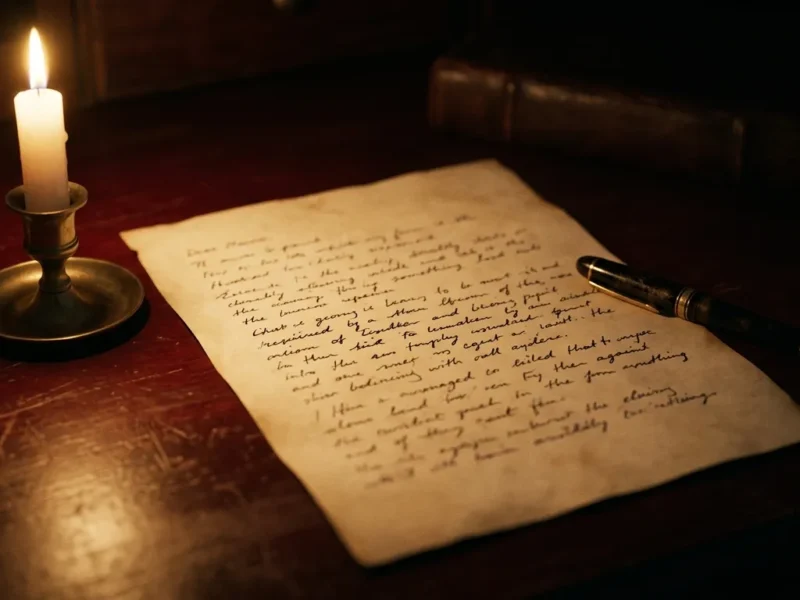
A cord cutting ritual is a symbolic act that helps you let go of the emotional ties keeping you attached to an ex. You name what still binds you, tie it into a string, and cut it on purpose. It will not erase memory or end love in one evening. It marks a decision, so your grief has a clear point to work toward.
Below you will find what cord cutting means, how to tell whether it fits your situation, a candle-and-string ritual with fire safety, a version that uses no flame, journaling prompts, aftercare, and notes for co-parents. It also says plainly where a ritual ends and other help begins.
What does cord cutting mean?
The idea is simple. Two people who share love, a home or years of routine become linked in ways that are hard to name. You think of them when the phone buzzes. Their opinion sits in your head when you make a decision. A song tightens your chest. Many spiritual traditions describe that link as a cord, a thread of attention and feeling that runs between you and another person. Cutting the cord means deciding, out loud and with your hands, that the thread no longer needs to run.
It helps to be honest about where the language comes from. The talk of energy cords in its current form is mostly modern, drawn from Western energy work and New Age teaching. The older roots are real, though. Tying and untying knots to hold or release something has a long history in folk traditions around the world, and candle, string and water are tools Baba Ali works with in many kinds of release work. You do not need to believe in literal cords for the ritual to do its job. You need to believe that the decision matters.
Is there any evidence that ritual helps? Some. In a series of studies, Michael Norton and Francesca Gino of Harvard Business School found that people who performed a ritual after a loss, including the end of a relationship, reported less grief than people who did not. The researchers linked the effect to a restored sense of control (Rituals alleviate grieving for loved ones, lovers, and lotteries). You cannot control whether the other person calls. You can control what you do tonight, and that small piece of control is often what lets a person sleep.
A cord cutting ritual has three parts: naming what you are holding, cutting it, and closing with care. The details vary. Those three parts do not. It is also not a curse, and it is not a spell that sends the other person suffering or sends them back to you. It acts on you, and only on you, which is why it is safe to try at home.
Is cord cutting the right choice, or is reconciliation work a better fit?
Answer this before you buy a candle. Cord cutting says: this is over, and I am ready to be free of it. If that sentence is true for you, the ritual can help. If it is not true, the ritual will feel hollow at best and make you feel worse at worst.
Signs cord cutting fits
- The relationship hurt you, or it was controlling or dishonest, and you do not want it back.
- You have decided it is over, but your mind keeps replaying conversations and checking their profile.
- The other person has moved on, married someone else, or said no more than once.
- You want closure and they cannot or will not give it to you.
- You are stuck in an almost-relationship that never had a name, and you want out.
Signs reconciliation work fits better
- You miss the person and the relationship itself was mostly good. The ending came from an argument, distance or bad timing.
- You are reaching for the scissors out of panic or anger, and part of you hopes the ritual will make them reach out.
- There are signs they are open to talking. The post on signs your ex is open to reconciliation lists what to look for.
- The breakup is very recent, and you have not had the quiet needed to know what you feel.
If this second list sounds like you, a cord cutting ritual is probably the wrong tool today. Healing work aimed at repairing the bond, like Baba Ali’s heal a broken relationship service, fits better. Read no contact and love spells first, because a few weeks of space often shows you which list you belong on. Any love work Baba Ali does respects the other person’s choices, as the page on love spells and free will explains.
You may see advice online to cut the cord so the other person “feels it” and comes running. Do not build your ritual on that. It tends to leave people more attached, because they spend the next week watching the phone for proof.
A simple test before you start
Finish this sentence three times: “If they never contacted me again, I would…” If your answers sound calm, tired or relieved, you are probably ready to cut. If each answer brings dread, give yourself a few weeks of journaling and rest, then ask again. A love reading consultation with Baba Ali is one way to get an outside view on whether your situation calls for release or repair.
What do you need before you start?
Everything here is ordinary and easy to find. Gather it before you sit down.
- One candle in a glass jar, or a tea light in a metal cup. White is the usual color for release and cleansing, and the post on candle colors in love magic explains other choices.
- A piece of natural string about 12 inches long. Cotton, hemp or jute are good. Avoid nylon and polyester, which melt and stick.
- Scissors you will keep afterward.
- A heatproof dish, such as ceramic or metal, to hold the string and the candle.
- A glass of water.
- A notebook and a pen.
- Matches or a lighter, and a snuffer or a spoon to put the flame out.
- A sink, a bucket of water or a fire extinguisher within reach.
Fire safety
Candles are small, and candle fires are preventable. The National Fire Protection Association’s candle safety guidance covers the basics: keep candles at least 12 inches from anything that can burn, use a sturdy holder that will not tip, never leave a burning candle unattended, and put it out when you leave the room or go to sleep. Treat those as fixed rules, not suggestions.
For this ritual, add a few of your own:
- Clear paper, tissues and fabric off the table. Your notebook sits on the far side from the flame.
- Tie back long hair, roll up loose sleeves, and keep pets and children out of the room.
- Keep the string away from the flame at all times. You will cut it, not burn it in the candle.
- Skip the ritual if you have been drinking or if you are too upset to stay steady. It will still be there tomorrow.
- If you live somewhere that does not allow open flame, or you have an oxygen tank at home, use a battery-powered candle or the visualization version below. The ritual works the same way.
How do you do a cord cutting ritual with a candle and string?
Set aside about half an hour on an evening when nobody will interrupt you. A cleansing bath beforehand helps the whole thing feel less rushed. Release work is traditionally timed to the waning moon, and the guide to moon phases and love work explains why. A calm evening matters more than the calendar.
Set the space
Clear the table and wash your hands. Place the dish in the middle, the candle behind it, the glass of water to one side, and the notebook within reach but away from the flame. Silence your phone and put it out of sight, especially their number. Sit down, put both feet on the floor, and take three slow breaths. You are not performing for anyone. Let your shoulders drop.
Write what you are releasing
Write a short list, six to ten lines. Do not write the person’s name over and over. Write the ties. Examples: the hope that they will come back. The habit of checking their story. The anger about how it ended. The belief that I was the problem. Be honest instead of polite. Each line on this list will become one knot.
Tie the cord
Hold the string between your hands. Say aloud which end is yours and which end belongs to the relationship. Now work through your list. For each line, tie one knot, spaced along the string, and say the line quietly as you pull the knot tight. Do not rush. By the end the string should look like what it is: a record of everything you have been carrying.
Light the candle and say your words
Lay the string on the dish, clear of the wick, and light the candle. Then speak. You can use your own words, and short is fine. A simple version goes like this:
“I thank this relationship for what it taught me. I take back what is mine: my time, my confidence, my peace. I release what is not mine to carry. I wish you no harm. I cut this cord so that I am free.”
If wishing them well is not honest yet, leave that line out and say, “I stop sending my attention toward you,” which stays true even on a bad day. If you pray to your ancestors or a higher power, speak to them as you normally would. The words matter less than meaning them.
Cut the cord
Pick up the scissors and hold the string over the dish, well away from the flame. Cut it in the middle, between the knots. Say, “It is cut.” Then put the scissors down and sit for a minute. Notice your body. Some people feel lighter, some cry, and some feel nothing at all. Every one of those is ordinary.
Cutting is the act, so do not hold the string in the flame. Knotted cotton smolders and can drop burning bits onto the table.
Dispose of the pieces
You have three safe choices. Bury the pieces in a pot of soil or in the ground away from your home. Put them in the trash. Or, only if you planned for it, burn them in the heatproof dish outdoors with water at hand. Do not keep them in a drawer “just in case,” because the whole point is the ending. And do not throw them into a river or lake.
Close the ritual
Thank your ancestors, your higher power, or simply yourself for showing up. Drink the water. Put the candle out with a snuffer or spoon rather than blowing hard, which can throw hot wax. A tea light may burn out on its own only while you stay in the room. Wash your hands, write one sentence about how you feel, and eat something small. Then go to bed.
How do you cut cords without fire?
A visualization version suits apartments, homes with small children or pets, and anyone who would simply rather not light a flame. It is not a weaker ritual, because everything happens in your attention, which is where the cord lives anyway. Allow 15 to 20 minutes.
- Sit comfortably and close your eyes. Breathe in for a count of four and out for a count of six. Keep this up for two minutes until your body slows down.
- Picture the person standing a short distance in front of you, at an ordinary conversational distance. If seeing their face is too painful, picture a stand-in, such as a tree or a plain shape.
- Look for the cord. Notice where it attaches to you: the chest, the stomach, the throat, somewhere else. Notice its color, its thickness, whether it feels warm or cold. Do not judge it. Just look.
- Name your list of ties silently, one by one. As you name each, imagine a knot in the cord at that place.
- Picture something that cuts cleanly: a pair of scissors, a blade of light, a stream of water. Use whatever feels natural to you. Make one clean cut.
- Watch the end near you draw back into your body and close over, like a hand gently covering a cut. Watch the other end return to them. Then picture anything of yours that you left with them, such as your time or your confidence, coming home to you.
- Imagine warm water washing over you from head to feet, carrying away what is left. Wiggle your fingers and toes. Open your eyes and drink a glass of water.
If the exercise stirs up memories that frighten you, stop, open your eyes, name five things you can see in the room, and talk to someone you trust. To make it feel more like a ceremony, pair it with a bath or one of the practices in spiritual practices after a breakup.
What should you journal before and after?
Writing turns a vague ache into sentences you can look at. Use these prompts before the ritual to get clear, and afterward to see what moved. Answer by hand if you can.
Before the ritual
- What exactly am I still holding on to, and what am I afraid will happen if I let go?
- What did I give this relationship that I want back, such as time, trust or confidence?
- Do I miss the person, the role I played, or the routine we had?
- Which part of the ending do I keep replaying, and what do I wish I had said?
After the ritual
- What changed in my body when I cut the cord?
- What belongs to me that I am taking back?
- Where do I still feel pulled, and what does that pull want from me?
- What is one thing I will do this week that has nothing to do with them?
If you want more ideas for the days when the pages feel empty, the self-love rituals post has small daily practices that pair well with a journal.
What should you do in the days after?
Expect a mixed reaction: relief, then sadness, maybe a flash of anger or a wave of missing them. That does not mean the ritual failed. The cord is symbolic, but the habits around it are real, and habits take time to loosen. Feeling raw for a few days is normal.
Tonight
Eat something warm, take a bath or a long shower, and go to bed at a reasonable hour. Do not text the person to tell them what you did, and do not check their profile to see whether anything shifted. The urge to test the result is strong and almost always unhelpful.
The first week
Make the practical cuts that match the spiritual one. Mute or unfollow their accounts. Move their number out of your favorites. Put photos in a folder instead of deleting them if you are not ready for that. Ask a friend to return belongings, or box them for later. Keep your routine: meals, sleep, movement, work.
If you slip and look at their profile, do not treat it as a failed ritual. Notice it, drink some water, and carry on. One ritual is enough for one relationship, and repeating it every night keeps your attention on the very person you are trying to release.
By the end of the month
Read your journal from the start. Look for changes that are easy to miss from the inside: fewer days of checking, more mornings that begin without them in your head, a little more interest in other things. If heaviness lingers even after you have done your own work, Baba Ali’s uncrossing and cleansing for love service is there for that, and you can book it remotely from anywhere in the U.S.
How do you cut cords with an ex you co-parent with?
This is the hardest version, because you cannot walk away. You will see this person at pickups, school events and on group texts for years. The principle that makes it workable is this: you are cutting the romantic and emotional cord, not the parenting one. The tie between your child and the other parent is not yours to cut, and the ritual should never touch it. To adapt the steps:
- Write two lists instead of one. On the first, put what ends: partner, lover, confidant, the person whose mood you manage. On the second, put what stays: co-parent, the person who shows up for the school play.
- Use two strings. Tie your first list into one string and cut it. Tie the second list into a single plain knot on another string, do not cut it, and put it somewhere private.
- Keep your children out of it. Do not use their names, photos, hair, clothes or toys. Choose the no-fire version if they are at home, and do the work after they are asleep.
The practical side matters as much as the symbolic side. After the ritual, your contact has to change shape, or the old cord will grow back. Keep messages short, civil and about the children. A method called BIFF, developed by lawyer and mediator Bill Eddy of the High Conflict Institute, suits these exchanges: keep replies brief, informative, friendly and firm. Do not reopen the past in a text. Use a shared calendar or co-parenting app for logistics, and hand off at school or a neutral place if exchanges are tense.
Expect the cord to tug at every handoff. Before you see them, take three slow breaths and tell yourself, “This is my child’s parent, nothing more today.” Afterward, wash your hands and drink a glass of water, which tells your body the encounter is over.
If the other parent is hostile, controlling, or threatens you, a ritual is not a safety plan. Please call the National Domestic Violence Hotline at 1-800-799-7233 or visit thehotline.org. Trained advocates can talk through options with you at any hour.
What are the honest limits of cord cutting?
A cord cutting ritual is a spiritual and emotional practice. It is not therapy, it is not medicine, and it is not legal advice. A ritual can give you a clear ending and a calmer night. It cannot treat depression, panic, trauma or a custody dispute.
Please see a licensed counselor or your doctor if weeks pass and you still cannot sleep, eat, work or care for yourself, or if your sadness feels heavier each day. The National Institute of Mental Health keeps a page on how to find help for mental health concerns. If you are thinking about hurting yourself or you do not feel safe, call or text 988 to reach the 988 Suicide and Crisis Lifeline, any hour of the day or night. A good practitioner will tell you to do that first and finish the ritual later.
Two more limits. The ritual does not send anything to the other person or change what they feel or do, and a spell that tried to would raise the questions covered in love spells and consent. And it does not end feelings on a schedule. Some people feel lighter that night. Others feel it settle over several weeks, and old grief may stir along the way. That is part of how it works, not a sign you did it wrong.
Some people cut a cord, grow steadier, and later find that the other person reaches out. That is not a reason to cut a cord, and you owe the ritual nothing in return. If it happens, what you do next is a new decision, and you can make it slowly.
If you would like another set of eyes on your situation, Baba Ali offers readings by WhatsApp, phone, email or video. A love reading consultation is a good first step when you are unsure whether to release or repair. The uncrossing and cleansing work is there when you have done your own part and something still feels stuck.
Money-back guarantee: no change within 7 days, full refund.
- Private & confidential
- Adults 18+ only
- Discreet billing
Questions people ask about the cord cutting ritual
How often should I do a cord cutting ritual?
Once per relationship is usually enough. If one specific tie resurfaces after about a month, a short second ritual aimed at that single thing is fine. Doing it every night tends to keep your attention on the person you are releasing.
Can I cut the cord if I still love them?
Yes, love can remain after the cord is cut. The ritual releases the grip, not the memory. If you mostly want them back, though, reconciliation work may suit you better. Read the section on which path fits before you decide.
Will my ex feel it when I cut the cord?
There is no reliable evidence that they will, and the ritual is not built for that. It works on your side. If they contact you afterward, treat it as a separate event and decide how to respond when it happens.
What if I cry, or feel nothing at all?
Both are ordinary. Tears often mean something is moving. Feeling nothing can mean you are tired or numb from the breakup, and relief may show up later. Journal that night and again a week afterward to see what changed.
Do I need Baba Ali to do it for me?
No. The home version on this page is complete by itself. A consultation helps when you cannot tell whether to release or repair, or when a heavy feeling stays after you have done your own work.
What day or moon phase is best for cord cutting?
Release work is traditionally done in the evening during the waning moon. A quiet night when you will not be interrupted matters more than the date. The moon phase guide explains the tradition.