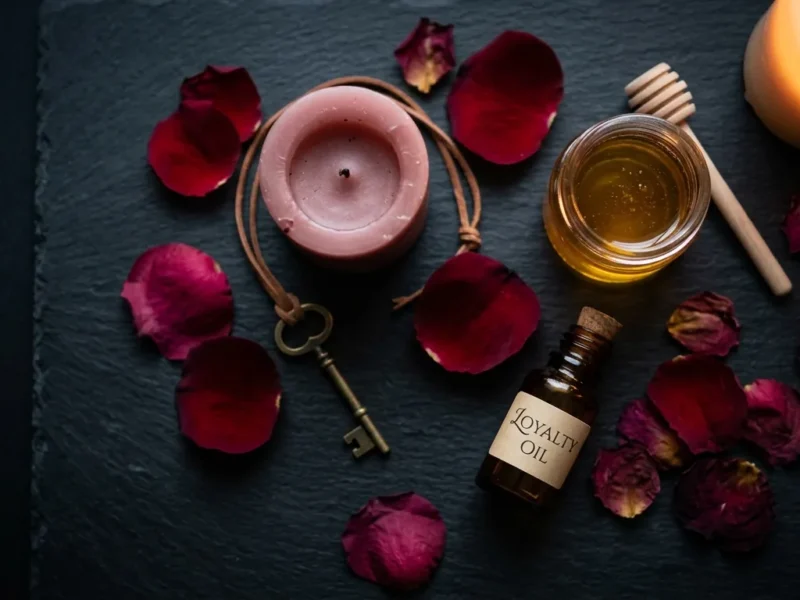
Love spells for same-sex couples work the same way as love work for any couple: they strengthen a real bond, soften hearts, clear interference and draw a partner back toward you. Nothing about the ritual needs to change because two men or two women are in love, or because a partner is bisexual, transgender or nonbinary. What sometimes differs is the situation around the relationship, such as family rejection, a partner who is not out, or safety concerns, and good love work takes those seriously. Most clients see the first signs within 3–7 days. If they don’t, they get a full refund.
This post explains how Baba Ali Musa approaches love work for LGBTQ+ clients, the challenges it most often helps with, how privacy and safety are handled, what is never done, and how to begin.
Love is love at the altar
At the altar, love work is about two people and the bond between them. The candles, honey, cords and prayers do not ask about gender. A petition with two women’s names or two men’s names is prepared exactly as any other. Red means passion, pink means tenderness, white means clearing, whoever is in love.

That is not a new or modern idea. Across many cultures, people of every kind have sought spiritual help with love. What has changed in recent decades is that more LGBTQ+ people can seek that help openly, and more practitioners say plainly that they welcome them. Baba Ali does.
A changing legal and social picture
Same-sex relationships in the United States have gained legal protection in living memory. In June 2015, the Supreme Court ruled 5–4 in Obergefell v. Hodges that same-sex couples have a constitutional right to marry in every state (Obergefell v. Hodges). The number of Americans who openly identify as LGBTQ+ has also grown: Gallup reports that 9.3% of US adults now identify as lesbian, gay, bisexual, transgender or something other than heterosexual (Gallup).
But legal rights and social acceptance are not the same everywhere. Many LGBTQ+ clients still face disapproving families, hostile communities or workplaces where being out carries risk. Those pressures often shape why a relationship is struggling, and they shape how love work needs to be done.
The challenges clients most often bring
Family disapproval
A partner’s family, or your own, may reject the relationship, sometimes openly and sometimes through quiet pressure. Relationships under that strain can break even when the love is strong. Clearing interference loosens the pull of disapproving voices without harming anyone.
A partner who is not out
When one partner is closeted, the relationship often lives in hiding. That can mean secrecy, sudden withdrawals when family visits, or a partner who leaves because the fear of being seen feels bigger than the love. Love work here focuses on steadiness and courage in the bond itself. It never pushes anyone to come out before they are ready.
Small dating circles
In many places, LGBTQ+ communities are small, and everyone knows everyone. Exes stay in the same friend groups, and a breakup can feel inescapable. That makes return work delicate, and it makes privacy essential.
Bisexual partners and jealousy
When one partner is bisexual, insecurity about the other genders they are attracted to can cause friction. Blue and pink work for trust and calm often helps, alongside honest conversation.
Transition and change
When a partner transitions or comes out as nonbinary, relationships go through real change. Some deepen; some struggle. Love work can support a couple who want to stay together through that change, always respecting who each person is.
Long-distance relationships
Many LGBTQ+ couples meet online or move to cities where they can live more openly, which often means distance. Long-distance love work is designed for exactly this.
Privacy comes first
For LGBTQ+ clients, privacy is not a nice extra. It can be a matter of safety, employment or family relationships. Baba Ali’s standard privacy protections apply to everyone, and they matter especially here:

- Your request is encrypted the moment it arrives.
- Only Baba Ali can open it, and every access is logged.
- Nothing about your case is ever published or shared.
- You choose how and when you are contacted.
- Your data is deleted automatically after 12 months, and you can delete it instantly from your case tracker.
If you share a phone, computer or email with family, use your own devices and accounts, and tell Baba Ali the safest way to reach you. The client rights and privacy guide explains exactly what is kept.
The altar does not ask who you love. It asks whether the love is real.
What is never done
Some requests are always declined, for every client. For LGBTQ+ clients, a few deserve to be named clearly:
- No work to change anyone’s sexual orientation or gender identity. Love work strengthens a bond between people as they are. It is never used to make someone straight, gay, or anything other than who they are.
- No work to out anyone. Nobody’s identity will ever be exposed through this work.
- No work to harm a rival, including a partner’s new partner.
- No work where there is abuse, a protective order, or someone who has asked the client to stay away.
- No work involving anyone under 18.
If a caster offers to “turn” someone’s orientation, that is not love work, and it is not something a trustworthy practitioner would do.
Traditions and queer love
African diaspora traditions have long had space for LGBTQ+ people, even when the societies around them did not. In Haitian Vodou, for example, Erzulie Dantor, the fierce, protective mother among the Erzulie spirits, is associated with protecting the marginalized, and in some traditions with masisi (queer men) and transgender women (Erzulie Dantor). Many LGBTQ+ people have found welcome in Vodou houses, Santería ilés and among rootworkers when other religious communities turned them away.
Baba Ali’s practice comes from a Senegalese lineage and does not claim these specific traditions. But it shares the conviction that love, sincerely held, is worthy of prayer.
Which work suits which situation
| Situation | Work that often fits |
|---|---|
| Partner left or went quiet | Return work |
| Relationship cold or tense | Sweetening |
| Family or friends pushing you apart | Clearing interference |
| Partner will not commit | Commitment work |
| Want the bond to hold | Binding |
| Single, looking for love | Soulmate or attraction work |
The Same-Sex Love Spells page describes this work in more detail.
When a partner is not out
This deserves its own section because it comes up so often. If your partner is closeted, love work is shaped around their safety as well as your relationship. The aim is steadiness, trust and warmth between the two of you, not pressure on them to come out. Aftercare in these cases often includes guidance on patience and on communicating without ultimatums. “Come out or I’m leaving” is sometimes a real boundary, and you have the right to set it. But it is rarely the thing that helps a frightened partner find courage.
When a partner goes back to a straight relationship
Some clients come to Baba Ali after a partner left them for someone of another gender, sometimes under family pressure, sometimes in confusion about their own identity. These situations are painful and complicated. Love work can turn the partner’s attention back toward the bond if it is still real, and clearing can loosen outside pressure. But it cannot decide who someone is. If the reading shows that your partner has made a settled choice, you will hear that honestly.
Love work for LGBTQ+ singles
Not every client is trying to save a relationship. Many LGBTQ+ people come to Baba Ali because they are single and struggling to meet someone serious, especially in smaller towns or communities where the dating pool is limited and apps feel exhausting. Soulmate work and attraction work open the way for the right person to find you. The petition describes the qualities you hope for in a partner rather than naming a specific person, and the work is timed as the moon grows. Nothing about it assumes the gender of the person you will meet.
Faith, rejection and healing
Many LGBTQ+ clients grew up in religious communities that rejected them, and some carry real pain about faith and spirituality. It is understandable to feel wary of anything that looks religious. Baba Ali’s practice does not judge who you are or who you love. Prayer at the altar is offered for your relationship and your happiness, not for you to change. Some clients find that working with a practitioner who accepts them fully helps heal old wounds around faith, not only around love.
When your ex is in the same friend group
In close-knit LGBTQ+ communities, a breakup rarely stays private. You may see your ex at every party, in every group chat, sometimes with someone new. That makes return work delicate. Aftercare often includes guidance on staying warm and calm in shared spaces, avoiding public scenes, and not drawing friends into choosing sides. Mutual friends are often where early signs appear, so keep your interactions kind and relaxed.
Coming out and relationships
Coming out, whether to family, at work or to yourself, can shake a relationship in unexpected ways. A partner who has just come out may need time and space. A partner who is not ready may feel pressure from one who is. Love work can support a couple through these seasons by strengthening patience and trust, alongside honest conversation. It never sets a timeline for anyone’s coming out.
Finding affirming support
Spiritual work and counseling go well together. If you and your partner want help talking through hard issues, look for a counselor who describes their practice as LGBTQ+ affirming. Many directories let you filter for that. An affirming counselor will not treat your relationship as the problem.
Couples who want to marry
For many same-sex couples, marriage is now a real and legal possibility, and some come to Baba Ali when one partner is ready and the other is hesitant. That hesitation can have many sources: fear of family reactions, memories of a time when marriage felt impossible, worries about money or the future. Marriage work and commitment work focus on steadiness and trust so that a hesitant partner can move forward freely. When a couple does marry, blessing work can mark the new beginning.

Aftercare for LGBTQ+ couples
Aftercare notes are written for each case, but a few points come up often for LGBTQ+ clients. Keep the work private, especially if your partner is not out. Avoid drawing mutual friends into the situation. Be patient with a partner facing family pressure, and do not ask them to choose between you and their family in the first days after contact returns. And look after your own support network: chosen family matters, especially when blood family is difficult.

Looking after yourself
LGBTQ+ people face higher rates of rejection and stress, and a breakup can reopen old wounds from family or community. Look after yourself through this. Lean on chosen family and friends. If you are struggling, the Trevor Project supports LGBTQ+ young people, and the 988 Suicide & Crisis Lifeline is available to everyone by call or text. The aftercare page lists more free, confidential support.
An illustration
This is a composite example, not a real client’s story. Two women have been together for four years. One has never told her family. When a cousin sees them together, the family reacts badly, and the partner who is not out panics and ends the relationship to avoid a confrontation. The reading shows that the bond is strong on both sides and that fear, not a lack of love, drove the breakup. Clearing work loosens the family’s pressure, and gentle return work follows. The first sign comes as a late-night message: “I miss you. I’m sorry.” The conversations that follow are slow and careful, and the partner who left sets her own pace on what to tell her family.
Signs to watch for
Signs are the same as for any couple: contact after silence, a softer tone, being unblocked, nostalgia, a third person fading, talk about the future. In relationships under family pressure, a common early sign is a partner standing up for the relationship more than before, or spending less time with people who oppose it. Our post on signs a love spell is working has the full list.
Timelines and the refund
Most clients see the first signs within 3–7 days. If you don’t, you get a full refund under the Refund Policy. Full reconnection takes longer, usually a few weeks, and more when outside pressures are strong. Our post on how long a love spell takes to work explains the stages.
What you will be asked, and what you will not
You share your first name and date of birth, your partner’s first name if you choose, and what has happened. You will never be asked to explain or justify your identity, your partner’s identity or your relationship. You will never be asked for photos, passwords or anything that could expose you. The reading is free, and you decide with no pressure.
A welcoming practice
Many LGBTQ+ people have been judged by religious or spiritual figures, and it is reasonable to feel cautious. If anything about how you are treated ever feels disrespectful, say so directly to contact@exbacklovespells.online. The commitments in the Ethics Charter apply to every client equally.
How to begin
Start with a free reading. Tell Baba Ali what is happening in your relationship, including any family or safety concerns. You will hear honestly whether the bond is open and which work fits. If you are not sure where to start, a love reading is the gentlest first step. You might also like our post on how to get your ex back with a love spell.
Questions about love spells for same-sex couples
Do love spells work the same for same-sex couples?
Yes. The ritual works on the bond between two people, whatever their genders.
Do you work with transgender and nonbinary clients?
Yes, with the same care, the same privacy and the same refund terms.
Can a spell change someone’s sexual orientation?
No, and Baba Ali will not attempt it. Love work strengthens bonds between people as they are.
My partner is not out. Will this expose them?
No. The work is completely private, and nothing about your case is ever shared or published.
My partner’s family is pulling us apart. Can you help?
Often, yes. Clearing interference loosens their influence without harming them.
Will I be judged?
No. You will never be asked to explain or justify who you are or who you love.
Can you help me find a same-sex partner?
Yes. Soulmate and attraction work open the way for the right person, whatever their gender.
What if nothing changes?
Most clients see the first signs within 3–7 days. If you don’t, you get a full refund under the Refund Policy.