
To read love spell caster reviews well, look for specific, balanced detail rather than perfect praise; check that the number of reviews claimed matches the number actually shown; be suspicious of identical phrasing, stock photos and “chat screenshots”; and pay attention to reviews that mention how refunds or problems were handled. Real reviews sound like real people: hopeful, doubtful, sometimes frustrated. Fake ones sound like adverts.
This post explains why reviews in this field are often unreliable, the signs of fake and genuine reviews, what to make of ratings and screenshots, how Baba Ali Musa handles reviews, and how to leave a review that actually helps others.
Why reviews matter so much here
When you are looking for a love spell caster, you cannot test the product before you buy it, and you are usually in pain. Reviews become one of the only ways to judge who to trust. Scammers know that, which is why fake reviews are so common in this field. They create pages of glowing testimonials, invent success stories and post fake “proof.”
Regulators have taken notice. In August 2024, the Federal Trade Commission announced a final rule banning fake reviews and testimonials, including reviews that misrepresent who wrote them, and allowing the agency to seek civil penalties against knowing violators (FTC). That is a step forward, but it does not stop every fake. You still need to read carefully.
Signs a review may be fake
- Perfect, generic praise. “Amazing caster, my lover returned in 24 hours, 100 stars!” with no detail.
- The same phrasing repeated across many reviews.
- Dramatic, impossible results, like an ex returning with a ring the next day.
- Stock photos of smiling couples. A reverse image search often reveals them.
- All five stars, with no mixed or critical reviews at all.
- Numbers that do not match. “Over 10,000 reviews” but only twelve on the page.
- Reviews posted in bursts, many on the same day.
- Reviews that name the caster in every sentence, like an advert.
- Contact details inside the review, such as a phone number or email to “contact this great caster.”

Signs a review is probably real
- Specific details: timing, what the reading said, what the first sign was.
- Honest doubt: “I was skeptical, and the first few days nothing happened…”
- Mixed feelings: things got better but not perfect.
- Mentions of process: the consultation, aftercare, how questions were answered.
- Mentions of problems handled well, such as a refund given without fuss.
- A believable spread of ratings across many reviews.
Real reviews sound like people. Fake reviews sound like sales copy.
Be careful with screenshots
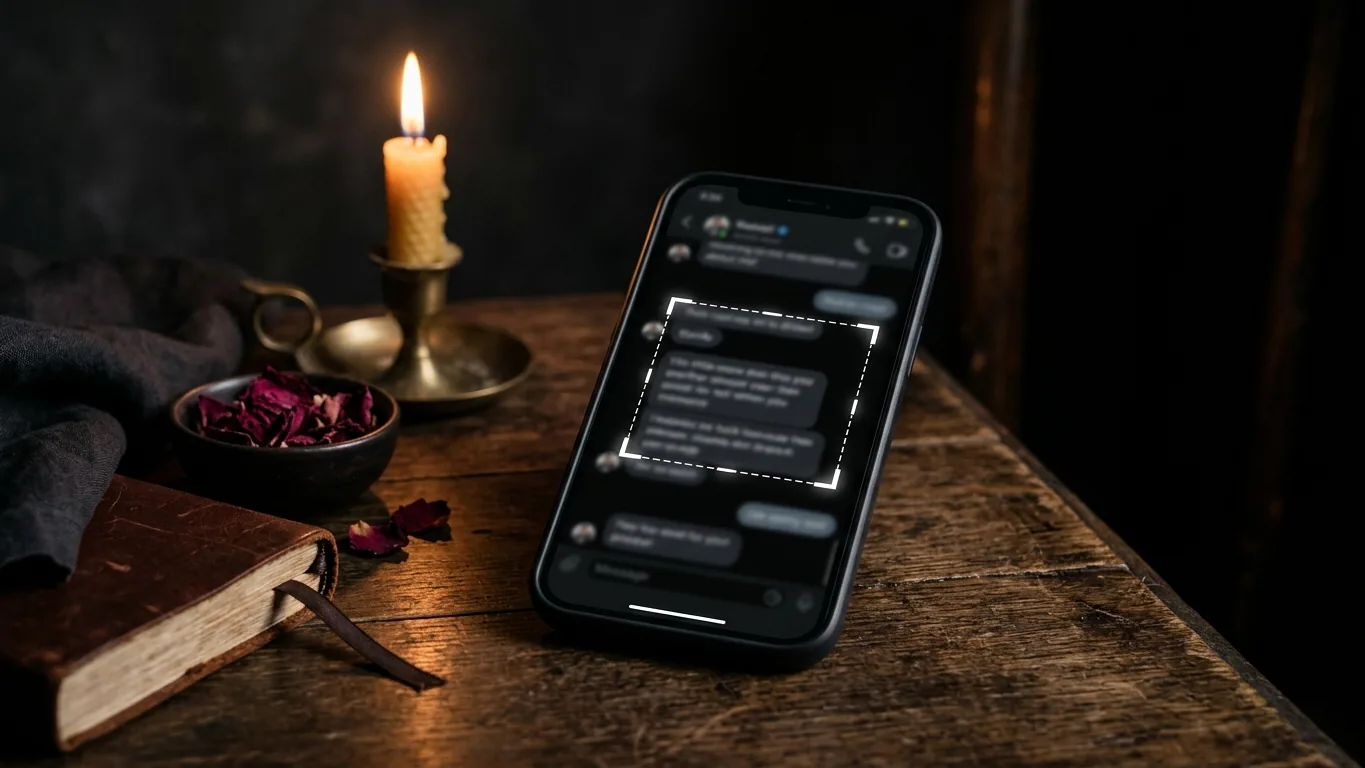
Many caster sites show “proof” in the form of chat screenshots: a client thanking the caster, or an ex texting “I miss you.” Screenshots are easy to fake. They can be typed in minutes with free tools, and even genuine ones may be shared without the client’s consent. Treat them as decoration, not evidence.
Ratings and star averages
A star rating is only as meaningful as the reviews behind it. Be wary when a site shows an average rating from thousands of reviews but displays only a handful. Structured data on websites, the code that tells search engines about ratings, can be manipulated too. Honest sites show the reviews behind their rating, and the rating matches what you can read.
Where reviews appear, and where they do not
Many spiritual practitioners are not listed on large independent review platforms, sometimes because those platforms restrict the category. That means most reviews you see will be on the caster’s own website, where the caster controls what is shown. That is not automatically suspicious, but it means you should read them with the signs above in mind, and look for other signals of honesty: a clear refund policy, cases declined, transparent pricing.
Reviews that mention refunds
Some of the most useful reviews are about what happened when things did not work. Did the caster honor the refund? Was the client pressured to buy more work instead? Were they told their case was cursed? A caster whose reviews mention smooth refunds is showing you something important. A caster with no mention of refunds, or reviews describing endless extra payments, is showing you something too. Our post how to choose a real love spell caster lists the other warning signs.
Why honest practitioners may have fewer reviews
It can seem strange, but a caster with a modest number of reviews may be more trustworthy than one with thousands. Genuine reviews come slowly. Many clients in love work value privacy and do not want to write about their relationship publicly, even anonymously. Some are embarrassed that they sought spiritual help at all. An honest practitioner who only publishes consented reviews will naturally show fewer than a scammer who invents them.
Reading negative reviews
Negative reviews can be the most informative of all. Read how the complaint is described and, if the caster responded, how they responded. A complaint that the work was slow, followed by a calm reply explaining the process and a refund, is reassuring. A complaint about endless extra payments, threats or ignored messages is a serious warning. And a site with no negative reviews at all is either very new or very curated.
Manipulation tactics to know about
- Review gating: only asking happy clients to leave reviews, or hiding negative ones.
- Paid or incentivized reviews: discounts or free work in exchange for five stars.
- Staff-written reviews: the caster or their team posing as clients.
- Borrowed reviews: testimonials copied from other sites or other businesses.
- Fake third-party badges: logos of review sites or awards that were never earned.
Several of these practices are covered by the FTC’s 2024 rule on fake reviews and testimonials. If you spot them, treat the whole site with caution.
Video and social media testimonials
Video testimonials and social media posts can feel more convincing than text, but they can be staged too. Actors can be hired, clips can be edited, and accounts can be bought with ready-made followers. Look for consistency over time, real conversation in the comments, and a practitioner who answers questions openly rather than only posting praise.
Personal recommendations
A recommendation from someone you know and trust is often worth more than any number of online reviews. If a friend or family member has worked with a practitioner, ask them honest questions: what was promised, what it cost, what happened, and how problems were handled. Their answers will tell you more than a star rating.
What a trustworthy review page looks like
- Reviews with specific, varied detail.
- A believable mix of ratings.
- A clear statement of how reviews are collected and verified.
- A rating that matches the reviews shown.
- Links to the refund policy and other policies nearby.

Reviews in social media groups
Some people look for recommendations in online groups and forums. These can be useful, but be alert: scammers sometimes post fake recommendations for themselves using other accounts, or reply to people in distress with “I know a great caster who helped me” and a phone number. Be especially wary of unsolicited recommendations sent to you privately after you post about your heartbreak. Genuine recommendations usually come with details and without pressure.
The pull of success stories
When you are hurting, a story about someone else’s ex returning in three days can feel like a lifeline. That is exactly why dramatic success stories are so effective at selling. Notice the pull, and take a breath before acting on it. Ask whether the story is specific, believable and verifiable, or just the thing you most want to hear. The more a review promises what you desperately want, the more carefully it deserves to be read.
Checking a practitioner’s other claims
Reviews often sit alongside other claims: years of experience, numbers of clients, awards, lineage, locations. Check what you can. Do awards name a real organization? Are client numbers sourced, or just large? Do the listed offices exist? A practitioner who exaggerates in one place is likely exaggerating in the reviews too. Baba Ali’s site avoids unsourced statistics and invented awards for exactly this reason.
Questions to ask about reviews
- How do you collect reviews, and do clients consent to publication?
- Do you publish negative reviews?
- What does “verified” mean on your site?
- Can I speak to your refund policy before booking?
A practitioner with nothing to hide answers these easily.
Reviews and your privacy
If you decide to leave a review for any practitioner, think about your privacy first. Relationship details are personal, and reviews live online for a long time. Use a first name or initials, avoid identifying the other person, and leave out details that could reveal who you are to people who know you. A good practitioner will respect that and never publish more than you agreed to. With Baba Ali, you can ask for your review to be edited or removed at any time.
When reviews and reality do not match
Sometimes a caster’s reviews are glowing but your own experience is not. You may feel pressured, ignored or misled while the reviews describe a perfect service. Trust your own experience. Reviews describe other people’s situations; your experience describes how this practitioner is treating you now. If the two do not match, that mismatch is itself important information.
Reviews that sound too similar to your story
Scammers often write reviews designed to match the most common situations: an ex who left for someone else, a marriage heading for divorce, a partner who will not commit. If you read a review that feels uncannily like your own story, pause. That is exactly the effect it was written to create. Real reviews are messier and more specific, full of small details that would not apply to everyone. Recognition is powerful; it is also easy to manufacture.
Why this matters beyond money
Fake reviews do not only cost people money. They cost time, hope and trust. Someone who pays a scammer after reading glowing reviews may give up on help altogether when nothing changes, even when honest support could have helped. Reading carefully protects your heart as much as your wallet.
A simple review checklist
- Are the details specific and varied?
- Is there a believable mix of ratings?
- Do the numbers match what is shown?
- Are there mentions of refunds or problems handled fairly?
- Is there a clear policy on how reviews are collected?
How Baba Ali handles reviews
You should hold Baba Ali to the same standard. Here is how reviews work on this site:

- Every review comes from a real client who agreed to publish it.
- Reviews are never invented, bought or written by staff.
- Negative reviews are not hidden.
- A “Verified client” tag appears only when a review has been matched to a real case.
- Clients choose the name shown and can ask for a review to be edited or removed at any time.
- Any star rating shown matches the reviews displayed.
You can read client reviews on the reviews page. The commitments are also in the Ethics Charter.
What reviews cannot tell you
Even genuine reviews have limits. Every relationship is different, and someone else’s result does not predict yours. A glowing review from a client whose ex returned in days does not mean your situation will move at the same pace. What reviews can tell you is how a practitioner treats people: whether they are honest, responsive, respectful, and fair about money. That is often more useful than the outcome stories.
How to check a caster beyond reviews
- Is there a written refund policy you can read before paying?
- Does the practitioner decline some cases?
- Are costs clear before you commit?
- Does the site avoid fake statistics and invented awards?
- Are there real policies on privacy and data?
- Does the practitioner answer questions calmly and clearly?
The scam warning signs guide goes deeper.
How to leave a helpful review
If you work with any practitioner, a thoughtful review helps others. Useful reviews include:

- What your situation was, in general terms, without private details.
- What the process was like: the reading, communication, aftercare.
- What you noticed and when, honestly, including doubts.
- How any problems or questions were handled.
Protect your privacy: you do not need to share names, photos or anything that could identify you or the other person. Our post signs a love spell is working may help you describe what you noticed.
If you were scammed
If a caster took your money and kept inventing reasons for more, your honest experience can protect others. Report it to the FTC at ReportFraud.ftc.gov, contact your bank or card provider about a dispute, and consider leaving a factual review wherever the caster advertises. Stick to facts: what was promised, what was paid, what happened. If previous work has left you anxious, uncrossing and cleansing can help you start fresh.
An illustration
This is a composite example, not a real client. A person searching for help finds two caster websites. The first shows 4.9 stars from “12,000+ clients,” twenty identical five-star reviews and chat screenshots, with no refund policy. The second shows a few dozen reviews, mostly positive but with some mixed ones, several mentioning that a refund was given without argument, plus a clear written policy. The first looks more impressive. The second is almost certainly more honest.
Start with honesty, not ratings
Reviews are one signal among many. The strongest protection is choosing a practitioner who tells you the truth: what the work can and cannot do, what it costs, and what happens if it does not help. With Baba Ali, the reading is free, costs are clear, and most clients see the first signs within 3–7 days, with a full refund if they don’t. Start with a love reading, or learn more about voodoo love spells.
Questions about love spell caster reviews
How can I tell if spell caster reviews are fake?
Look for generic praise, repeated phrasing, stock photos, impossible results, and ratings that do not match the reviews shown.
Are chat screenshots proof?
No. Screenshots are easy to fake and should not be treated as evidence.
Are all five-star casters scammers?
Not necessarily, but a wall of perfect reviews with no mixed ones is a reason to look closer.
Are Baba Ali’s reviews real?
Yes. Every review comes from a real client who agreed to publish it, and none are bought or invented.
Can I remove my review later?
Yes. You can ask for your review to be edited or removed at any time.
Why do some honest casters have few reviews?
Genuine reviews come slowly, and many clients value privacy. Consented reviews will always be fewer than invented ones.
Should I trust video testimonials?
With care. Videos can be staged. Look for consistency, open answers to questions and clear policies.
What if the work does not help me?
Most clients see the first signs within 3–7 days. If you don’t, you get a full refund under the Refund Policy.