Symbolic Ritual Gallery
Explore a symbolic gallery of candlelight, roses, botanicals, and spiritual intentions created for Baba Ali Musa’s website.
This gallery presents symbolic artwork and material arrangements associated with reflection, intention, communication, healing, protection, and new beginnings. Images can illustrate a mood or explain a material category; they do not document a client result or prove an effect on another person.
Use the captions as context, not as prediction. Every visual on this page is labeled for accessibility and should be read alongside the written scope of a service. A polished photograph never replaces itemization, consent, safety, delivery records, or realistic expectations.
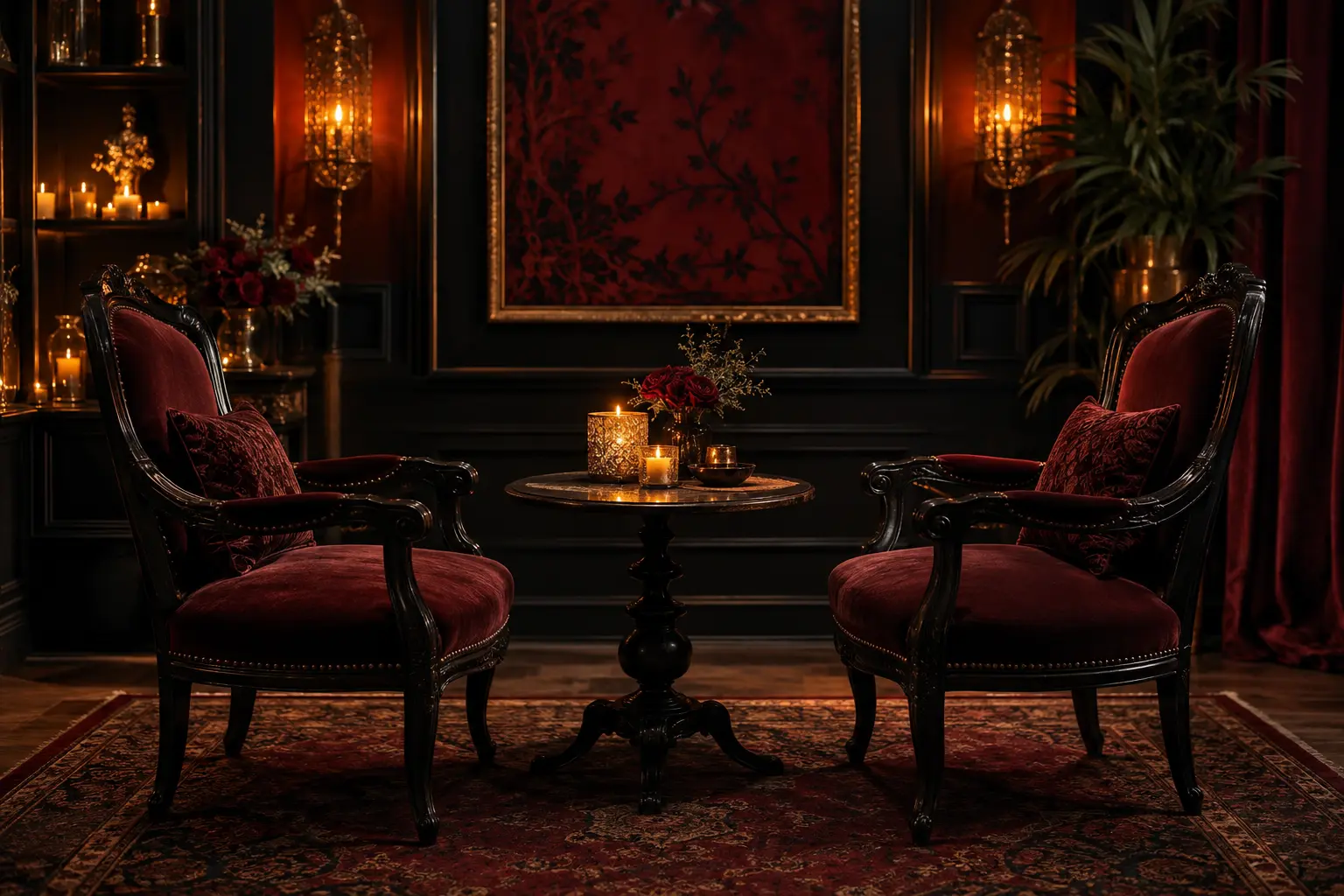
Candles as symbols of attention and review
Candlelight may represent focus, warmth, transition, or a defined period of reflection. Color meanings vary across practitioners and communities, so ask what a chosen color means in the proposed work rather than assuming one universal code.
Fire safety remains ordinary and essential. Never leave a flame unattended, keep it away from fabric and children, and use a stable surface with ventilation. An unlit candle or electric light can carry symbolic meaning when flame is unsuitable.
Botanicals, fragrance, and responsible handling
Leaves, flowers, roots, oils, and fragrance may be selected for symbolic associations. An image cannot confirm species, purity, safety, sourcing, or suitability. Ask what material is shown, whether it is essential, and who is expected to handle it.
Do not ingest an unknown substance or apply concentrated oil without appropriate safety information. Consider allergies, asthma, pets, pregnancy, medications, and building rules. A written symbol or non-fragrant alternative may be more appropriate.

Journals, letters, and written intention
A journal can help separate direct facts from interpretation and belief. Written intention may also define the value you want to practice: honesty, patience, courage, accountability, protection, or acceptance. The document is a tool for reflection, not a contract binding another person.
Protect privacy when writing. Use initials or general descriptions where possible, store notes securely, and avoid copying stolen messages or intimate details. Destroy drafts safely when they are no longer needed.
Stones, color, and personal symbolism
Stones such as rose quartz are often associated with tenderness or self-reflection in popular spiritual practice. Those meanings are symbolic and culturally variable. Price, size, rarity, or color does not demonstrate a stronger relationship effect.
Ask whether a stone is supplied, borrowed, optional, or represented only in imagery. Care instructions should be practical, because some minerals are affected by water, heat, sunlight, or skin contact.
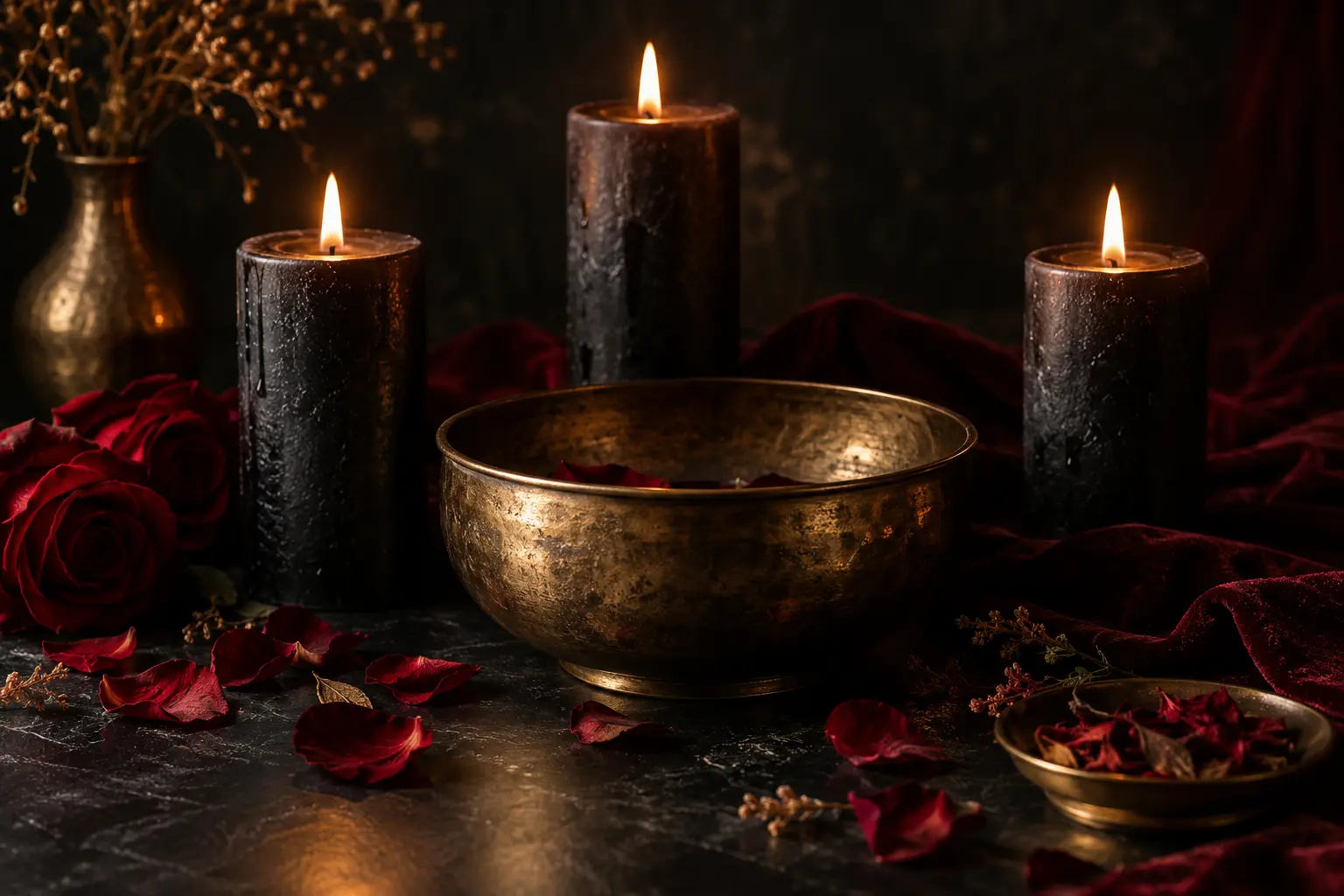
Altars and arranged ritual spaces
An altar photograph can show how objects are organized around an intention. It cannot show another person's thoughts, prove causation, or establish that a particular client received the pictured work. The exact materials for an individual service belong in the proposal.
Look for captions that distinguish illustrative artwork from documentary evidence. If a provider shares client-specific images, they should have permission and remove unnecessary identifying details.
Timing symbols and the meaning of completion
Hourglasses, moons, clocks, or staged sequences can represent a review period or practitioner schedule. They should not be read as proof that a relationship outcome will occur within three to seven days or any other fixed deadline.
Ask which dates concern provider delivery and which statements are only spiritual interpretation. A finished ritual image can document that an arrangement was created; it cannot guarantee contact, return, commitment, or exclusivity.
How to assess images before booking
Check whether captions identify the image as illustrative, whether alt text describes the meaningful content, and whether any client claim is supported and permission-based. Reverse the usual sales question: instead of asking whether the picture looks powerful, ask what factual information it provides about scope, materials, and safety.
Do not upload another person's private image merely because a visual ritual is offered. Ask about necessity, retention, access, and deletion. Use the client privacy guide before sending any personal media.
A practical preparation checklist
- Read the caption and alt text.
- Distinguish illustration from client evidence.
- Ask which materials are actually proposed.
- Review fire, fragrance, allergy, and pet safety.
- Do not share intimate or stolen images.
- Treat timing symbols as symbolism, not guarantees.
Use this checklist before sharing personal information or authorizing payment. It creates a consistent record of what you asked, what was proposed, and which questions remain unanswered. Clear preparation is especially valuable when relationship stress creates urgency.
Pricing, refunds, and realistic expectations
There is no one fixed price tag for every request. The stated approach is that clients pay for items proposed for their individual work. Request the material categories, complete expected total, optional additions, provider-delivery dates, and the approval process for changes before paying. Do not interpret a larger payment as proof of stronger power, faster timing, or control over another person.
The site states that clients receive a full refund if there are no results. Obtain the exact written definition of results, the review period, payments covered, exclusions, evidence, request route, and processing time. A refund promise is a commercial policy; it does not make another adult's feelings, contact, commitment, or return a guaranteed deliverable.
No spiritual service on this site should be understood as overriding free will, creating consent, or forcing behavior. Claims of guaranteed mind control or guaranteed relationship results within three to seven days are not supported. Service dates should describe what the provider can deliver, while relationship developments should be evaluated through voluntary communication and observable conduct.
Frequently asked questions
Are these photographs proof of results?
No. The gallery uses symbolic artwork and explanatory imagery. It does not prove a relationship outcome.
Will my exact materials look the same?
Not necessarily. Ask for the item list and purpose in your individual written proposal.
Can I send a partner's photo?
Ask why any image is needed and whether you have a lawful, respectful basis to share it. Never send intimate or stolen images.
Do colors have one fixed meaning?
No. Meanings vary by practitioner, community, and context. Request the explanation used for your proposal.
Are candles required?
Not always. Ask whether a safe non-flame alternative can serve the same symbolic purpose.
Why are images labeled as symbolic artwork?
The label prevents an illustrative scene from being mistaken for proof of a specific client service or result.
Continue with the right resource
Review all services, read how the consultation process works, compare the service scope and pricing guide, check the cancellation and refund guide, protect your information with the client privacy guide, or send a private inquiry.